Joseph Rotblat Quotes
Since the end of the Cold War two main nuclear powers have begun to make big reductions in their nuclear arsenals. Each of them is dismantling about 2,000 nuclear warheads a year.
Rotblat, Joseph. "Remember Your Humanity." Les Prix Nobel: The Nobel Prizes 1995, edited by Tore Frängsmyr, Nobel Foundation, 1996.


The origin of the United States refusal to rule first use out lies with the Cold War concern of a massive Russian Ground attack in European countries. Even with NATO, we could not deploy ground and air resources fast enough to prevent the takeover of entire countries. Then when we amassed the troops and airpower to counterattack, there would be massive civilian casualties of the invaded nations. So American strategy, at the insistence of our European Allies was to deter invasion. By renouncing first use, the Western Powers would almost invite the Russians to invade European nations. There was a similar fear of North Korea and China,


This was his last publication. He died of a heart attack as the magazine was being printed. Since this was written one other possible use of nuclear weapons has been suggested—namely, retaliation for a biological attack. From a policy point of view, maintaining an arsenal of biological weapons for retaliatory purposes is dangerous and use for retaliation of biological weapons is not very controllable and arguably less humane than a nuclear weapon. His point however still holds. We have to have a national defense policy against many threats and we have to have defense policies that handle all these without nuclear tactics is insufficient to handle any of the threats without causing more problems and we have other weapons and techniques that are just as, if not more, effective. They and systems under development have the major role in our current defense policy.
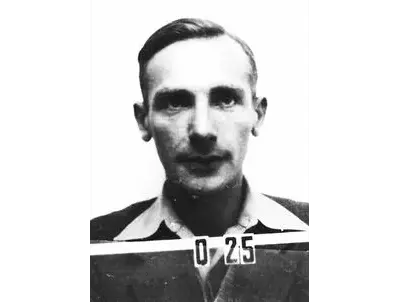
Sir Joseph Rotblat KCMG CBE FRS was a Polish physicist, a self-described "Pole with a British passport". Rotblat worked on Tube Alloys and the Manhattan Project during World War II, but left the Los Alamos Laboratory after the war with Germany ended. His work on nuclear fallout was a major contribution toward the ratification of the 1963 Partial Nuclear Test Ban Treaty. A signatory of the 1955 Russell–Einstein Manifesto, he was secretary-general of the Pugwash Conferences on Science and World Affairs from their founding until 1973 and shared, with the Pugwash Conferences, the 1995 Nobel Peace Prize "for efforts to diminish the part played by nuclear arms in international affairs and, in the longer run, to eliminate such arms."
