Thomas Jewett Goree Quotes
Since the battle of Manassas an apathy seems to have rested upon our people. We ... have considered one Southerner as a match for five Yankees. We have thought that the Yankees would always take to their heels after a few rounds. But while these reverses have proved to us that our foes are not such cowards as we have heretofore taken them for, it has also disclosed the very disagreeable fact that our forces are not the invincible heroes which we thought them to be.
Thomas Jewett Goree, 1835–1905, Attorney & Confederate Military Officer, Letter to his family, February 15, 1862
Sourced by: Eigen's Political and Historical Quotations

That is the way he was killed. The phrase, “We are bound to believe that, anyhow” indicates that Stuart really realized how futile the Southern war effort would be but loyalty and patriotism required him to suspend his rational belief structure.

The Virginia Campaign of May 1864 was clearly the beginning of the end of the war. This was clear at the time, not only to the military leaders of both sides, but also to the media and thence the general public in the North. At the beginning of the war the Army of the Potomac, the largest Union Army was commanded by McClellan whose concerns were with his own political career and not winning the war. He had an aversion to heavy fighting and did not see the war strategically as Lincoln, Grant and Sherman did: To cripple the capacity of the South to wage war. So the early history of the Army of the Potomac was a series of undecisive battles which were either standoffs or the Confederates won despite the much larger and better armed and equipped Union army. As soon as McClellan was replaced, things began to turn around and when Grant was selected for Command of all Union Troops, the Army of the Potomac performed much better, including taking Richmond, the Confederate Capital.


This quotation is historically very interesting. Southern educational materials were extremely scarce with paper one of the commodities most in short supply as the only book paper in the South came from England and had to be smuggled through the Union blockade. Yet the priority was so high that paper was made available in the midst of the Civil War. Confederate civilian morale was a very serious problem while at the same time large numbers of Southern civilians and military were delusional about the Confederate fighting capability. Central to that theme was the myth that the Southern soldier, fighting for such a righteous cause, was several times more effective than his Yankee counterpart. Therefore, the fact that the South was outmanned, out gunned, and out supplied, did not imply a Union victory. So teaching this to the young Southern children who would spread it to the adults on the home front, was a conscious Confederate propaganda effort at this time. Also, the use of these kinds of death and killing arithmetic problems for young children, while considered patriotic in the South was thought to be gross, crude, uncivilized and unchristian by most in the North. The implied 90 to 1 superiority ratio was laughed at in the North, but actually believed by a substantial number of Southerners.

The Germans and Americans did this as a standard practice. The French “history” to which the General referred did not involve machine guns and mortars. The entrenching tool (shovel) was a fundamentally important piece of equipment to the Germans and Americans but not the French at the beginning of WWI. Later in the war, the French finally learned.


Eggleston was an accomplished writer who had served in the Confederate army of the Civil War. 20 year after the war he wrote a series of articles for the prestigious Northern Atlantic Monthly trying to convey the war from the Southerner’s point of view. Here he reveals that the Confederacy had developed a culture of positivism about winning the Civil War in which it was unpatriotic to consider reality. This caused the war to go on longer than was rational from a Southern military and economic point of view.


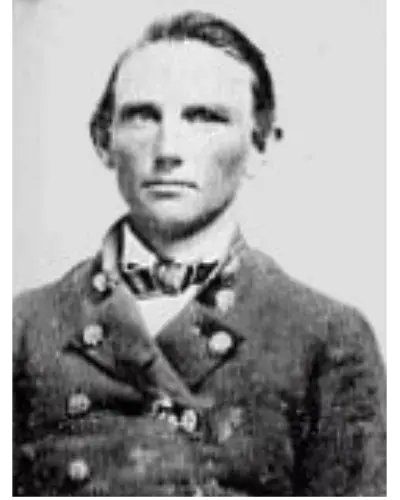
Thomas Jewett "TJ" Goree was a Confederate Captain in the First Corps, Army of Northern Virginia during the American Civil War. By the end of the war he was promoted to the rank of captain. He was one of Lt. General James Longstreet's most trusted aides.
