Manu Quotes
She who drinks spirituous liquor, is of bad conduct, rebellious, diseased, mischievous, or wasteful, may at any time be divorced and superseded by another wife.
Manava Dharma Shastra. This text is a part of the Hindu Holy Texts. Hindus believe that Manu was a prophet whose text is revealed or inspired.
Manu, ~ 500 BC, Hindu Teacher from India, Laws of Manu
Sourced by: Eigen's Political and Historical Quotations


Manava Dharma Shastra. This text is a part of the Hindu Holy Texts. Hindus believe that Manu was a prophet whose text is revealed or inspired.
Manava Dharma Shastra. The caste system in action. Note however that the highest caste aristocrats could not abuse even lower caste women with impunity the way that was common in early Christian Europe. However, the punishment was not death as required by Muslim law—see {590409}. This text is a part of the Hindu Holy Texts. Hindus believe that Manu was a prophet whose text is revealed or inspired.
Manava Dharma Shastra. This text is a part of the Hindu Holy Texts. Hindus believe that Manu was a prophet whose text is revealed or inspired.
Manava Dharma Shastra. Drinking alcohol was a very serious sin for the upper three castes. The lowest caste, the untouchables, were permitted to drink however. The theory was that alcohol pollutes the individual soul. Since the lowest caste man is already polluted, it makes no difference. This text is a part of the Hindu Holy Texts. Hindus believe that Manu was a prophet whose text is revealed or inspired.
He was justifying the Egyptian legal system which gives a man the right of unilateral divorce by just filing a declaration with the court while a woman must petition the court, go through mediation, meet a very high standard of proof, and then wait for the years that this takes in Egypt.

This is one of the proverbs of King Solomon of the Jews, son of King David.


Many whites applauded his views when they corresponded to Christian mores of the time.


Samuel Langhorne Clemens, 1835-1910. The Congressmen who voted for Prohibition in the next century had not read or believed this quotation of Twain’s.

She was a baroness—a member of the aristocracy who was a social reformer
Editorial castigates the many divorce seekers from other states coming for Indiana liberal divorce laws

This method of substance abuse prevention represents what scientists now call “environmental prevention” where instead of dealing with individual alcoholics the environment is altered to reduce the likelihood of developing fewer alcohol-related problems. Almost every state uses Locke’s principle and regulates the number of liquor outlets in any most areas. Those communities which have a very high density of bars and liquor stores tend to have more alcohol-related violence. The riots of the Watts area of Los Angeles in the late 20th century took place in one of the highest densities of liguor stores in the country.


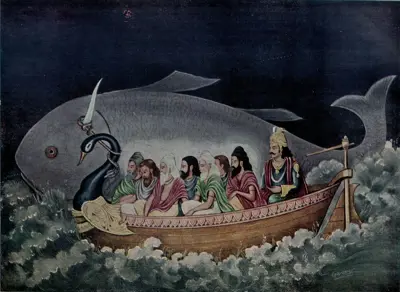
Manu (Sanskrit: मनु) is a term found with various meanings in Hinduism. In early texts, it refers to the archetypal man, or to the first man (progenitor of humanity). The Sanskrit term for 'human', मानव (IAST: mānava) means 'of Manu' or 'children of Manu'. In later texts, Manu is the title or name of fourteen mystical Kshatriya rulers of earth, or alternatively as the head of mythical dynasties that begin with each cyclic kalpa (aeon) when the universe is born anew. The title of the text Manusmriti uses this term as a prefix, but refers to the first Manu – Svayambhuva, the spiritual son of Brahma.
