Fritjof Capra Quotes
Scientists, therefore, are responsible for their research, not only intellectually but also morally. This responsibility has become an important issue in many of today's sciences, but especially so in physics, in which the results of quantum mechanics and relativity theory have opened up two very different paths for physicists to pursue. They may lead us - to put it in extreme terms -- to the Buddha or to the Bomb, and it is up to each of us to decide which path to take.
See Hans Bethe {628530} for a practical implication of this principle.
Fritjof Capra, Austrian-Born Physicist, The Turning Point: Science, Society, and the Rising Culture, 1983
Sourced by: Eigen's Political and Historical Quotations

Bethe was the head of the Theoretical Division of Los Alamos and was one of the Senior Scientists who developed the Atomic Bomb. At the time, he was very enthusiastic about scientists helping to stop the Germans and Japanese from winning WWII. He had been a refugee from Nazi Germany and became a great American Patriot. However, when there were tens of thousands of nuclear weapons—enough to destroy the entire population centers of the earth several times over, he urged a reduction and finally made this plea the year before he died. See {628438} for a recent expression of the principle of individual scientist’s responsibility.


This quotation not only illustrates the discomfort of the atomic scientists who developed the atomic bomb regarding the ethics and decision making regarding use, but also how complex a man Teller himself was. Here he sounds like a left-leaning centrist. A little later he would side with the hawks in the military and the political world and slander his colleague Oppenheimer publicly advocating an arms race and the development of the hydrogen bomb when the existing technology of the atom bomb could wipe out Russia or any other nation. His new allies however kept everything about nuclear weapons a secret and thus the public could never weigh in and influence any nuclear decision making. This state existed until President Eisenhower declassified much of the nuclear weapons information as part of his Atoms for Peace program.

The Scientific Project that developed the Atomic Bomb. Hundreds of thousands of American troops were on their way to join the invasion of Japan where there were huge American casualties expected when the two atom bomb drops ended the war. At the time, surprising to most people now, the use of the atomic bomb was not an issue of controversy at all. There were no Congressman who questioned it, no newspapers which editorialized against the use of the bomb. There were not even any other counties which protested its use. The blessing of ending the war, even at the cost of less than 200,000 deaths seemed a clearly desirable tradeoff when compared with the many millions of deaths that would have occurred had the bomb not been used. As an example, the conventional bombing of Tokyo before the nuclear weapons were used killed as many Japanese as either Hiroshima or Nagasaki.


At the time there were some religious extremists who interfered with important research as they did not believe that man should try and do what before only God could do. In modern times the religious interference in scientific research has tended to be about research involving contraception, abortion or embryonic stem cell research. The most dangerous by the 21st century were the PETA and other “animal rights” terrorist groups who not only physically sabotaged some scientific research but harmed people and endangered human life in the process. Note that Dewey placed the moral burden on society to enable scientific research, not just to resist special interests opposing science.

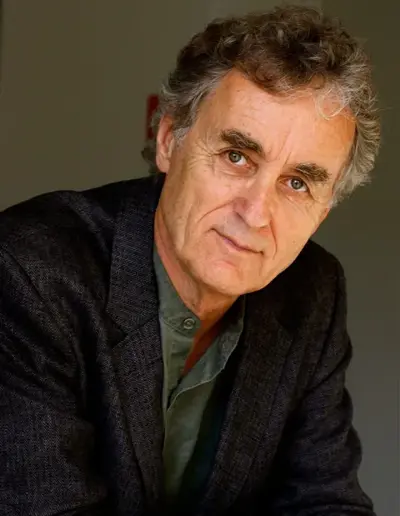
Fritjof Capra is an Austrian-born American physicist, systems theorist and deep ecologist. In 1995, he became a founding director of the Center for Ecoliteracy in Berkeley, California. He is on the faculty of Schumacher College.
