Oliver Goldsmith Quotes
Romance and novel paint beauty in colors more charming than nature, and describe a happiness that humans never taste. How deceptive and destructive are those pictures of consummate bliss!
Goldsmith, Oliver. The Citizen of the World; or Letters from a Chinese Philosopher, Residing in London, to his Friends in the East. Vol. 2, J. Newbery, 1762, p. 89.


This quotation illustrates a not uncommon problem of scientists trying to explain to sophisticated businessmen or politicians new ideas in science. They have no training in trying to separate the possible from the crackpot ideas or how to take an assertion and ask for the right kinds of evidence to test it. It is probably one of the mosot difficult problems for a politician in assessing new scientific and technological ideas. In this particular case, today we all know that glass fiber can carry an immense amount of digital information, but at the time it was as foreign and idea as if someone said that we can send electricity through the air to light bulbs with no wires. Yet that is just what some scientists have shown was possible recently. Most new science appears impossible and like magic. See {368568}.


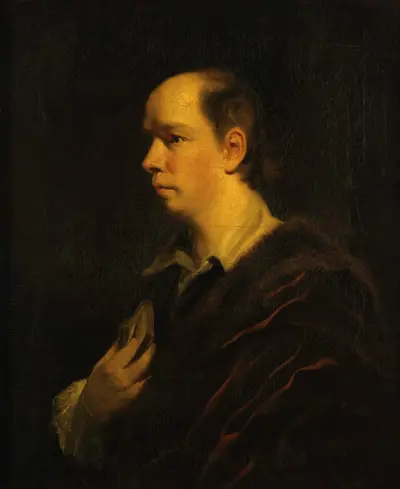
Oliver Goldsmith was an Anglo-Irish novelist, playwright and poet, who is best known for his novel The Vicar of Wakefield (1766), his pastoral poem The Deserted Village (1770), and his plays The Good-Natur'd Man (1768) and She Stoops to Conquer (1771, first performed in 1773). He is thought to have written the classic children's tale The History of Little Goody Two-Shoes (1765).
