Tomas G. Masaryk Quotes
Resistance to absolutism is characteristic of democratic progress.
Tomas G. Masaryk, 1850-1937, First President of Czechoslovakia, The Making of a State, 1914-1918, Lippincott, 1927
Sourced by: Eigen's Political and Historical Quotations


This quotation of a very popular Muslim cleric illustrates the wide range of political views of Islamic leaders and authorities. Whereas most shun democracy as placing public opinion over the word of God, there are many like al-Qaradawi who have a modernist interpretation of Islam.


This quotation is historically important because Davis clearly states the reason for the rebellion of the South. The anti-slave states were growing at a greater rate than the slave states and despite the greater voting power that a southerner had (a result of the 3/5 count of slaves for census purposes, and the Senate), the handwriting was on the wall and the majority of the United States was against the vicious institution of slavery and would make it unprofitable, impossible and/or illegal in the coming years. Southern slavery advocates saw this as a “tyranny of the majority” and therefore took up arms. In the early 20th century, apologists for the Southern rebellion tried to promote the idea that there were reasons other than slavery, but this quotation and the resolutions of the states who withdrew from the Union make it clear that the right to maintain slavery was the only significant issue. In that sense it was a States’ Rights issue, but the South was opposed to States’ Rights when it came to States refusing to return fugitive slaves when Federal Law required such under the Dred Scott Supreme Court Decision.

This quotation is very interesting in that many of Mrs. Roosevelt’s detractors constantly accused her of being a communist. They obviously had not read this column of any of the many where she shows antipathy to Communism.


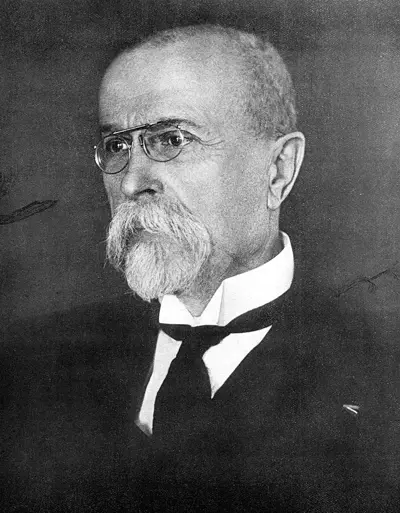
Tomáš Garrigue Masaryk was a Czechoslovak politician, statesman, sociologist, and philosopher. Until 1914, he advocated restructuring the Austro-Hungarian Empire into a federal state. With the help of the Allied Powers, Masaryk gained independence for a Czechoslovak Republic as World War I ended in 1918. He co-founded Czechoslovakia together with Milan Rastislav Štefánik and Edvard Beneš and served as its first president, and so is called by some Czechs the "President Liberator" (Czech: Prezident Osvoboditel).
