William Shakespeare Quotes
Report me and my cause aright.
Shakespeare, William. Hamlet. The Riverside Shakespeare, edited by G. Blakemore Evans, Houghton Mifflin, 1974.


Watkins was the first Dallas County Black DA. He was being interviewed because DNA testing proved that a man who had served 30 years in prison for rape and robbery, could not have committed the crime, and he had just been released. Watkins quotation was very significant because it set forth a philosophy that while extant in other areas of the country is almost unheard of in Texas, where there have been more innocent men convicted than in any other state. DAs in Texas usually fight every attempt to examine old evidence with modern tools.


This was a pointed criticism of McCarthyism and his red scare and red-baiting behavior. Others were cowed by the risk that any criticism of McCarthy’s methods would bring an accusation that the critic was a Communist which all too often would mean loss of a job and social isolation. However as a Federal Judge, the lifetime tenure protection of his position could lead to impeachment which would be brought and tried by a Congress that was itself intimidated by McCarthy. He was one of the relatively few courageous Americans who risked exposing McCarthy who turned out to be an alcoholic bully and consummate liar.

This is a notable quotation illustrating the state of relations between the press and the government under Theodore Roosevelt. Baker was one of the most muckraking of the investigative reports. And previously there were no accommodations for the press in government agencies. Roosevelt and most of his reformist appointees believed that public opinion was crucial to achieving their political objectives and that transparency would do them much more good than harm. Roosevelt and his colleagues had so much success with the press, that every administration since has made accommodations for the press and tried to use the press to promote their agenda. Most Presidents did not have the thick skin of Theodore Roosevelt who had been disrespected by some of the press since Abraham Lincoln. See {640476} for an example. Most Presidential administrations wanted the good press but also wanted to control the bad.

This is an amazing speech which illustrated the best of the development and growth of Islam. Note that: The ruler who has just been given ALL secular AND religious power admits candidly that he may not be the best qualified. This would not happen for over another 1000 years and even today is very rare in any society. In addition, he invites the citizens to correct him when he is wrong. Later, Calihs would, like the Christian kings and popes claim infallibiity and kill any who suggested otherwise. And daring to correct the ruler was capital offence for most of history and is even dangerous in some Muslim countries today. Last and perhaps most amazing, the new Caliph called for an affirmative leveling of the inequality of rights and power and announces it asa one of his major responsiblities. It is this kind of vision so unheard of at the time which shows us why so many flocked to Islam at the time. From a fairness, human rights, and accoutabiity of the ruler point of view Islam was the most modern of the religions then. Tragically, other forces shaped Islam for the next 1500 years and most Muslim countries become the least modern and its rulers are least accountable to the citizenry with none of the other rights and concept of fairness that Abu Bakr and other early Islamic leaders brought.

New York Times columnist Bret Stephens wrote a piece criticizing the rationale behind the forced ouster of Times reporter Donald G. McNeil Jr., but it was never published. Stephens told colleagues the column was killed by publisher A.G. Sulzberger. Since then, the piece has circulated among Times staffers and others — and it was from one of them, not Stephens himself, that The Post obtained and published it.


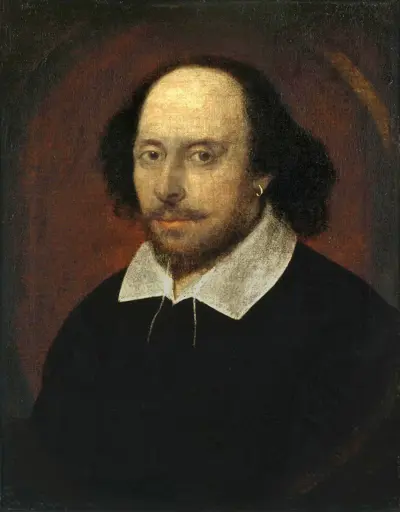
William Shakespeare was an English playwright, poet, and actor, widely regarded as the greatest writer in the English language and the world's greatest dramatist. He is often called England's national poet and the "Bard of Avon" (or simply "the Bard"). His extant works, including collaborations, consist of some 39 plays, 154 sonnets, three long narrative poems, and a few other verses, some of uncertain authorship. His plays have been translated into every major living language and are performed more often than those of any other playwright. They also continue to be studied and reinterpreted.
