Thurgood Marshall Quotes
Regardless of the strength of the government's interest [in protecting children,] the level of discourse reaching a mailbox simply cannot be limited to that which would be suitable for a sandbox.
Thurgood Marshall, 1909-1993, U. S. Supreme Court Justice, 1983
Sourced by: Eigen's Political and Historical Quotations

Tinker referred to the Supreme Court Case of Tinker v. Des Moines where the court ruled that school children had Constitutional rights as well as adults. It was not possible to have a blocking system that would keep “improper” or “indecent” internet sites from library or school computers. Even if it could, the appropriate material for a 17 year old to see and a 5 year old were very different. The blocking software never worked well. Computer sophisticated students would pride themselves by showing how they could evade the blocking software, and at the same time teen age girls would have health sites blocked because they showed how to do breast self-examinations.


The first Jew to run for the Vice Presidency on a major party ticket.


The evils of the time were even worse than in modern times. Most newspapers, journals, and periodicals were in 1835 actually owned and operated by political parties or people totally identified with political parties. In modern times, there are publications and blogs which are controlled by political forces, but most are not.


This principle was incorporated into American law by the Supreme Court 1964 decision in Sullivan v. New York Times, where this argument drove the opinion.


The Masses was a left wing publication which the then Post Office officials decided were “dangerous”. Later, the Supreme Court would hold that there could not be this degree of political censorship by Post Office officials.

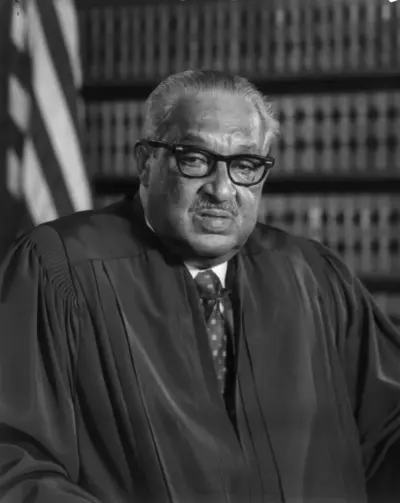
Thurgood Marshall was an American lawyer and civil rights activist who served as Associate Justice of the Supreme Court of the United States from October 1967 until October 1991. Marshall was the Court's first African-American justice. Prior to his judicial service, he successfully argued several cases before the Supreme Court, including Brown v. Board of Education.
