Sam Houston Quotes
[Referring to Jefferson Davis:] ... as cold as a lizzard with the ambition of Lucifer, and what he touches will not prosper.
Houston was deposed on March 18, 1861, because he refused to take an oath of allegiance to the Confederate States
Sam Houston, 1793-1863, Governor of Tennessee, First President of the Republic of Texas, U.S. Congressman (Democrat, TN) & U.S. Senator (Democrat, TX), Remark, 1861
Sourced by: Eigen's Political and Historical Quotations


When the first Southern States seceded, each appointed a whose job it was to persuade the other Southern States to also secede. In this case Hale was marketing secession to Kentucky which with Maryland were the only two Southern States to reject what they regarded as treason and rebellion. The importance of the quotation however is in his argument which was all based on enmity to racial equality and abolition. Later Southern apologists would argue that the Civil War was fought, not about slavery and racism butt about different philosophies of government. See {623715} .
This was a decade before there was a Civil War. Secession and war had been advocated by many Southerners for years before. Most people are not aware that the move toward secession did not suddenly appear when Lincoln was elected President. It had been festering for over a decade. The other importance of the quotation is that the Southernors knew perfectly well that their actions would lead to a civil war. Some Southern apologists claim that the South never saw their actions as treason, rebellion or the cause of a civil war. This quote shows that they well knew what they were doing and the result was exactly as most Southern leaders expected.

Oates was a Confederate Colonel during the Civil War. His statement almost started a brawl as the Memorial Dedication was a joint North-South participation event. Northern politicians, officers and men were outraged and rose to their feet with several mounting the rostrum to refute Oates intemperate remarks. However, like Southern politicians of the 1960s, they produced a lot of redneck support with such extreme statements. The main reason this quotation is important is that most politicians of North and South wanted to get the animosity of the Civil War over with and to do so sponsored these memorial events where both sides could celebrate and remember the bravery of men fighting and dying for their cause. The photographs of former enemies shaking hands which the newspapers ran frequently, would give the impression that by the 1880s the hatred and animosity of the Civil War was behind the nation. However, that was not at all true. Most veterans of both sides maintained their hatreds throughout their entire lives. Even their children carried the hatred into the next generation. Politicians were expected to not open the scabs of the old wounds in public, but many like Oates found political utility in not doing so. The moral outrage of many in the North remained until WWII when regional unity genuinely transcended the Civil War. See {639364} for a Northern example with no political motive but with uncontrollable moral outrage.


The early Union military leadership was so poor and timid that it was not clearly demonstrated that a Confederacy was not viable until later in the war, and the Southerners possessed an extraordinary capacity for ignoring reality and self-delusion, that it was not demonstrated until Grant’s major victories and Sherman’s March through Georgia and the Southern East Coast that an independent South was not going to be.

This quotation is fascinating and illustrates the depth and complexity of the problem facing Abraham Lincoln. Howell actually used the word “evil” to describe the abolitionists and their political efforts end slavery. He and other slave holders did not see slavery and the murder, brutality, and torture that went with it as evil. After the Presidential years of James Buchanan who protected the South from slavery reform and abolition as the North was gaining political power and the abolitionists were having a greater and greater effect on public opinion in the North. While Southerners did not believe Lincoln would emancipate the slaves, they realized that the majority of the growing nation was opposed to slavery, and more and more Northern states were passing laws making any slave who sets foot in the State a free person. Slaves could not only have more reason to run away, but slave owners would not be able to get their “property” back. Lincoln would not help the South as Buchanan did, and the Southerners realized that over time, slavery would no longer be feasible or profitable. Cobb, very experienced at Washington politics, realized the changes that would come and thought that they would be “certain and speedy.”—see {620555}. Lincoln had been elected a month earlier and without Buchanan as President to protect the institution of slavery, the anti-slavery majority of the country would prevail unless the South seceded. Cobb was one of the strong advocates. 6 days later, the Georgia legislature called for a convention to debate secession. The irony was that if the South had not seceded and simply dragged its feet legislatively, it would have taken two or three decades for slavery to end. However, by seceding and initially fighting so hard and well while weak Union generals were in command, Lincoln was forced to try more drastic measures and issued the Emancipation Proclamation after only a few years. The Civil War and secession was not only a tactical and strategic error for the South, but rapidly brought about just what the Southerners were fighting to prevent.

Eggleston was an accomplished writer who had served in the Confederate army of the Civil War. 20 year after the war he wrote a series of articles for the prestigious Northern Atlantic Monthly trying to convey the war from the Southerner’s point of view.

He stated that he had a vision and made these two prophesies that indeed came true. The first was the South Carolina secession starting the Civil War. The second, when the North used former slaves as soldiers who fought their old masters.

Lincoln did like the song, but his having it played was a signal to all that revenge and hatred should end. It is not known if he really did get such an opinion from the Attorney General, but the response silenced those who really sought vengeance and retribution.

The Baptist Churches of America were split asunder by the slavery issue. Wayland, who represented both the Northern abolitionist-leaning Baptist Churches and the Southern pro slavery churches, tried to forge a middle ground whereby slavery would end by the moral enlightenment of man and his love for fellow man as opposed to by legislation or economic pressure. He successfully predicted the outcome of the conflict except for one error he made. The conflict DID end slavery. The Baptist Church finally split into southern and northern wings in 1845. To this day, the Southern Church is extremely conservative, and fundamentalist; the Northern, very liberal and modern.

He had worked himself into a crescendo of shouting when he delivered this quotation. The main reason this quotation is important is that most politicians of North and South wanted to get the animosity of the Civil War over with and to do so sponsored these memorial events where both sides could celebrate and remember the bravery of men fighting and dying for their cause. The photographs of former enemies shaking hands which the newspapers ran frequently, would give the impression that by the 1880s the hatred and animosity of the Civil War was behind the nation. However, that was not at all true. Most veterans of both sides maintained their hatreds throughout their entire lives. Even their children carried the hatred into the next generation. Politicians were expected to not open the scabs of the old wounds in public, but many like Oates found political utility in not doing so. The moral outrage of many in the North remained until WWII when regional unity genuinely transcended the Civil War.
The Southern states were illegal rebels. A confederacy had always meant a voluntary association of otherwise independent entities. However technically the Southern states were not independent but in a state of illegal rebellion against the United States. Lincoln, a lawyer, could not being himself to refer to the South by their preferred name—the Confederacy. So this was how he and many in his administration referred to the South.

This was his name for the wealthy slaveowners in Tennessee. He was the military governor of Tennessee when he so labeled the secessionists.


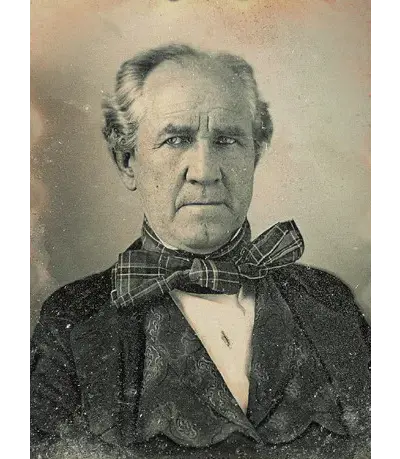
Samuel Houston was an American general. He was an important leader of the Texas Revolution, Houston served as the first and third president of the Republic of Texas, and was one of the first two individuals to represent Texas in the United States Senate. He also served as the sixth governor of Tennessee and the seventh governor of Texas, the only American to be elected governor of two different states in the United States.
