Mike Ross Quotes
Redistricting and a broken, polarized Congress have made it tough to be a moderate in Congress.
Ross, Mike. "Ross Announces He Will Not Seek Re-Election to U.S. Congress." Office of U.S. Representative Mike Ross, 25 July 2011.


Most political analysts agree that all of these were factors that produced the hyperpolarization of the time. There were others such as the Republican Southern Strategy which triggered a shift of Democratic conservatives to the Republican party. This made the Republicans more conservative and the Democrats more liberal. Then those strong ideological parties drove many of their moderates out, and the Tea Party ran even more conservative candidates knocking out less conservatives in the primaries. Another factor, the relatively even split of voters nationally causing most candidates to appeal to their bases which became more extreme. However, especially in the House of Representatives, the redistricting created so few competitive districts that there was no need for candidates with safe seats to even be concerned with moderate and undecided voters.


At the time Congress was gridlocked in bitter hyperpartisan conflict. Most people called for more comity and bipartisanship and most politicians wanted more bipartisanship but blamed the other party for the rift. Mourdock, arguing for less bipartisanship and no compromise defeated Richard Lugar in the Republican Senatorial Primary election. Lugar, one of the most respected and effective Senators was a statesman who worked with any and all to find effective compromises to reach national solutions. The nation was so politically polarized that the Republican Indiana voters ousted one of their most senior senators because he was effective at developing national solutions. See {626717} and {302706} for other Mourdock’s outrageous comments. While this rhetoric won in the Primary, it lost him the general election in a state where Republicans had a strong majority and should have had the seat.


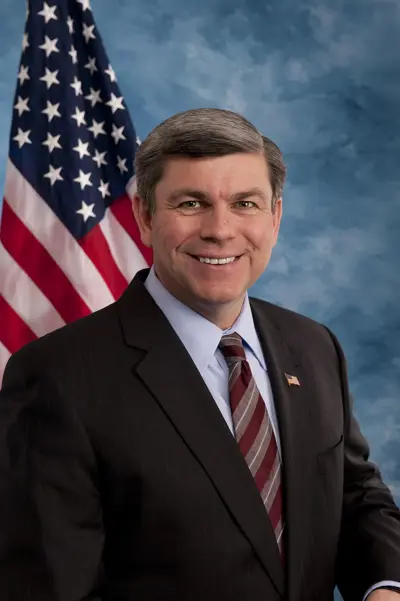
Michael Avery Ross is an American businessman and politician. A member of the Democratic Party, he served as the U.S. Representative for Arkansas's 4th congressional district from 2001 to 2013 and was his party's nominee for governor of Arkansas in 2014. He was also a member of the Arkansas Senate from 1991 to 2001, a member of the Nevada County Quorum Court from 1983 to 1985, and a small business owner.
