Iran Quotes
Publications and the press have freedom of expression except when it is detrimental to the fundamental principles of Islam
Iranian Constitution
Sourced by: Eigen's Political and Historical Quotations

This is typical of Nations which do not guarantee freedom of speech or the press. Whenever the authorities want to censor anything, they simply assert that it is contrary to Islamic values or objectives.

In September of 2005 a Danish Newspaper published some political cartoons showing the hypocrisy of some Muslims who use Islam to justify murder of innocents and terrorism. Months later, many in the Middle East protested vehemently and Muslim riots broke out because the Prophet Muhammad's visage was depicted against Islamic tradition. Many Muslim leaders claimed that insulting religion was an “abuse” of freedom of speech including those from nations which regularly publish material that is virulent against Christians and Jews. That was particularly true of Egypt which commonly insulted Christianity and Judaism and the government always claimed that they could not interfere with private publications and broadcasts because Egypt had freedom of speech and the press.

In September of 2005 a Danish Newspaper published some political cartoons showing the hypocrisy of some Muslims who use Islam to justify murder of innocents and terrorism. Months later, in January of 2006 many in the Middle East protested vehemently and Muslim fatal riots broke out because the Prophet Muhammad's visage was depicted against Islamic tradition. Many Muslim nations started a boycott against Denmark. Many Muslim leaders claimed that insulting religion was an “abuse” of freedom of speech including those from nations which regularly publish material that is virulent against Christians and Jews.
In September of 2005 a Danish Newspaper published some political cartoons showing the hypocrisy of some Muslims who use Islam to justify murder of innocents and terrorism. Months later, in January of 2006 many in the Middle East protested vehemently and Muslim fatal riots broke out because the Prophet Muhammad's visage was depicted against Islamic tradition. Many Muslim nations started a boycott against Denmark. Many Muslim leaders claimed that insulting religion was an “abuse” of freedom of speech including those from nations which regularly publish material that is virulent against Christians and Jews.

Note how the second paragraph nullifies the first of the government declares an emergency. This is a trick that is very common in constitutions.

In September of 2005 a Danish Newspaper published some political cartoons showing the hypocrisy of some Muslims who use Islam to justify murder of innocents and terrorism. Months later, in January of 2006 many in the Middle East protested vehemently and Muslim riots broke out because the Prophet Muhammad's visage was depicted against Islamic tradition. Many Muslim nations started a boycott against Denmark. Many Muslim leaders claimed that insulting religion was an “abuse” of freedom of speech including those from nations which regularly publish material that is virulent against Christians and Jews. The Sheikh along with many other Muslims called for the death penalty for the cartoonist who was exercising his Danish right of freedom of expression.

One of the noteworthy aspects of this quote is a fundamental intellectual clash. Al-Quaeda and other Islamic fundamentalists are genuinely very concerned that the West will interfere with their religion and their desire to unite all the Muslims in the world. Ironically, the West prides itself on the tolerance of religion and the freedom for anyone to practice any religion. The West does not see where it is interfering at all with the Muslim religion or its moral precepts. The problem lies in the different perception of ideas. Since about 1100 there has been a closing of Islamic intellectual growth and change. Any idea which is contrary to the orthodox view of Islam is perceived as hurtful or at least dangerous to the Muslim. Individuals in the West question Islamic relation no more than different sects of Christianity, Judaism and other religions. Allowing freedom is not sufficient for this Islamic notion; there must be no exposure to different ideas or examples. For us, no exposure means no freedom. While there are many Muslims which agree with this position, there are also many who disagree completely and believe that Islam is strengthened by exposing Muslims to all the ideas in the world. He was killed by an American air strike that had targeted him.

Arguing against explicit guarantees of press freedom in the Constitution Hamilton felt that the freedom could be maintained by public opinion and the good will of government:


In September of 2005 a Rose’s newspaper published some political cartoons showing the hypocrisy of some Muslims who use Islam to justify murder of innocents and terrorism. Months later, in January of 2006 many in the Middle East protested vehemently and Muslim riots broke out because the Prophet Muhammad's visage was depicted against Islamic tradition. Many Muslim nations started a boycott against Denmark. Many Muslim leaders claimed that insulting religion was an “abuse” of freedom of speech including those from nations which regularly publish material that is virulent against Christians and Jews. Apologies were demanded from Rose.
In September of 2005 a Danish Newspaper published some political cartoons showing the hypocrisy of some Muslims who use Islam to justify murder of innocents and terrorism. Months later, in January of 2006 many in the Middle East protested vehemently and Muslim riots broke out because the Prophet Muhammad's visage was depicted against Islamic tradition. Many Muslim nations started a boycott against Denmark. Many Muslim leaders claimed that insulting religion was an “abuse” of freedom of speech including those from nations which regularly publish material that is virulent against Christians and Jews. Westerners came to the support of Denmark. The United States which usually supports freedom of the press made this veiled criticism of the Danish Newspaper.


In September of 2005 a Danish Newspaper published some political cartoons showing the hypocrisy of some Muslims who use Islam to justify murder of innocents and terrorism. Months later, many in the Middle East protested vehemently and Muslim riots broke out and Danish boycotts ensued because the Prophet Muhammad's visage was depicted against Islamic tradition. Many Muslim leaders claimed that insulting religion was an “abuse” of freedom of speech including those from nations which regularly publish material that is virulent against Christians and Jews.

In September of 2005 a Danish Newspaper published some political cartoons showing the hypocrisy of some Muslims who use Islam to justify murder of innocents and terrorism. Months later, in January of 2006 many in the Middle East protested vehemently and Muslim riots broke out because the Prophet Muhammad's visage was depicted against Islamic tradition. Many Muslim nations started a boycott against Denmark. Many Muslim leaders claimed that insulting religion was an “abuse” of freedom of speech including those from nations which regularly publish material that is virulent against Christians and Jews.


For a corroberating quote see Quotation 644762


The evils of the time were even worse than in modern times. Most newspapers, journals, and periodicals were in 1835 actually owned and operated by political parties or people totally identified with political parties. In modern times, there are publications and blogs which are controlled by political forces, but most are not.

For a number of years Rushdie were in hiding and some of his publishing associates were killed or injured. Britain broke diplomatic relations with Iran over the Fatwa.

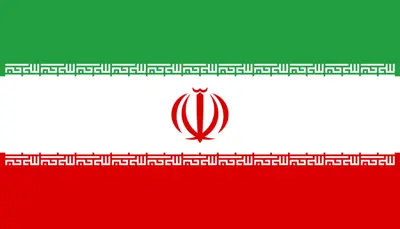
Iran, also called Persia (/ˈpɜːrʒə/) and officially known as the Islamic Republic of Iran (Persian: جمهوری اسلامی ایران Jomhuri-ye Eslāmi-ye Irān (listen)), is a country in Western Asia. With over 81 million inhabitants, Iran is the world's 18th most populous country. Comprising a land area of 1,648,195 km2 (636,372 sq mi), it is the second largest country in the Middle East and the 17th largest in the world. Iran is bordered to the northwest by Armenia and the Republic of Azerbaijan, to the north by the Caspian Sea, to the northeast by Turkmenistan, to the east by Afghanistan and Pakistan, to the south by the Persian Gulf and the Gulf of Oman, and to the west by Turkey and Iraq. The country's central location in Eurasia and Western Asia, and its proximity to the Strait of Hormuz, give it geostrategic importance. Tehran is the country's capital and largest city, as well as its leading economic and cultural center.
