SAUDI ARABIA
The road name is not only descriptive of the fact that Muslims make pilgrimages to Mecca for religious purposes. But by Saudi law, no one but a Muslim may use this road. Everyone in Saudi Arabia must have an identity card and that card is color coded by religion. For American’s the notion that there might be a public road on which only members of one religion may travel is as foreign a concept as there is.
This set of guidelines not only denies the media freedom of expression but requires them to protect Saudi’s from information or views that might divert them from Islam. The media must by law protect the establishment of a particular religion.
This is typical of Nations which do not guarantee freedom of speech or the press. Whenever the authorities want to censor anything, they simply assert that it is contrary to Islamic values or objectives.
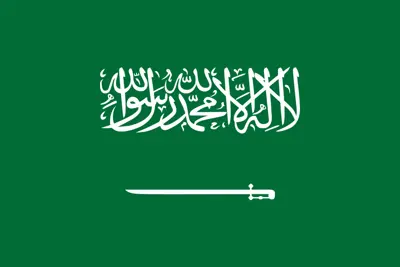
Saudi Arabia, officially the Kingdom of Saudi Arabia, is a country in Western Asia constituting the vast majority of the Arabian Peninsula. With a land area of approximately 2,150,000 km2 (830,000 sq mi), Saudi Arabia is geographically the largest sovereign state in Western Asia, the second-largest in the Arab world (after Algeria), the fifth-largest in Asia, and the 12th-largest in the world. Saudi Arabia is bordered by Jordan and Iraq to the north, Kuwait to the northeast, Qatar, Bahrain, and the United Arab Emirates to the east, Oman to the southeast and Yemen to the south; it is separated from Egypt and Israel in the north-west by the Gulf of Aqaba. Saudi Arabia is the only country with both a Red Sea coast and a Persian Gulf coast, and most of its terrain consists of arid desert, lowland, steppe and mountains. As of October 2018, the Saudi economy was the largest in the Middle East and the 18th largest in the world. Saudi Arabia also has one of the world's youngest populations, with approximately 50 percent of its population of 34.2 million being under 25 years old.
