David Hume Quotes
Prices of every thing depend on the proportion between commodities and money, and that any considerable alteration on either has the same effect, either of heightening or lowering the price.
David Hume, 1711-1776, Scottish Philosopher & Historian, Money, 1752
Sourced by: Eigen's Political and Historical Quotations


While devaluation may have been intended to have the effect of stimulating exports and inhibiting imports, many countries have populations which feel “cheapened” by the process—that they are worth less as laborers and their raw materials are valued less in the eyes of the world.


The alternative would have been for the colonies to borrow English money at high interest rates and use that. Or use money from private banks (which occurred later.) Many conservatives are today a little shocked that some of the American Colonies just printed money with no backing but it worked—at least at the local level. A Boston Bank for example, would take a large commission for a Bostonian to convert Pennsylvania money into Massachusetts money. So it was not a very good system for trade between colonies and International trade. But English money was used for that. The colonists pragmatically got the “best of both worlds” and paid as little interest as they needed to. This system is essentially what we use today on a national scale with no gold or silver backing of the money.


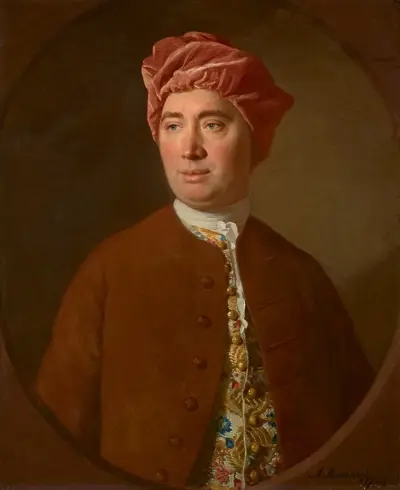
David Hume, Hume strove to create a naturalistic science of man that examined the psychological basis of human nature. Hume argued against the existence of innate ideas, positing that all human knowledge derives solely from experience. This places him with Francis Bacon, Thomas Hobbes, John Locke, and George Berkeley as a British Empiricist.
