Clark M. Clifford Quotes
[President Jimmy Carter] had so much going for him. He was elected without any real commitments.... To come in with no commitments gives a President a marvelous, broad flexible horizon of operation.
Clark M. Clifford, 1906-1998, U. S. Secretary of Defense (Democrat), Special Counsel to the President, PBS interview with Bill Moyers, 1981
Sourced by: Eigen's Political and Historical Quotations


Alberto Gonzalez, White House Counsel and later Attorney General who was forced to resign and David S. Addington, Counsel to the Vice President, had come up with a novel view of the powers of the presidency. They argued that since the President is the Commander in Chief, in a war situation or intelligence gathering thereto, has the Constitutional responsibility for that function, he need not obey any laws of Congress as in the conduct of the war Congress would be impinging on the Constitutional separation of powers which itself was prohibited by the Constitution. The argument did not find any significant legal support but for a while the George W. Bush White House behaved as if this were the law, despite the fact that even in the American Revolution and the War of 1812 Congress passed laws regulating the conduct of the armed forces as is provided for in other parts of the Constitution. Yet even Goldsmith would allow the President some powers that many think are unconstitutional and/or belong to Congress. See {32436}.

This was a prevailing philosophical view in England and other monarchies. American Founding Fathers were quite familiar with Hobbes’ works and views and many specifically rejected it. Some of the Federalists wanted to extend some of the traditional prerogatives of monarchy to the American Presidency while the Jeffersonian Republican Democrats wanted the executive treated like any, one else before the law. Today that view generally holds, but there is a vestige of the Hobbes’ view still present in things like Executive Privilege.


Referring to President Bush's winning a roll-call vote in the House on lowering the capital gains tax:


America’s first political economist. This is a wonderful quotation which shows the compromises that even a great president like Abraham Lincoln had to act when Congress passed must have bills.


Actually, there are many in politics who to this day castigate Truman for his decision, but for Bloomberg’s generation and before, anyone would have pushed the button. And there are some who still fault Obama as technically, the U. S. had no right to violate Pakistani airspace and kill a resident of their state without any due process in the U. S. or Pakistan. Bloomberg would have easily pushed that button, but there are many officials who warned against it, and earlier Presidents—George W. Bush and Bill Clinton who did not authorize assassinations in foreign (allies) countries.


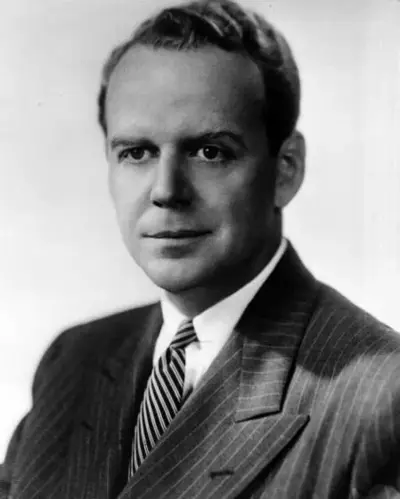
Clark McAdams Clifford was an American lawyer who served as an important political adviser to Democratic presidents Harry S. Truman, John F. Kennedy, Lyndon B. Johnson, and Jimmy Carter. His official government positions were White House Counsel (1946–1950), Chairman of the President's Intelligence Advisory Board (1963–1968), and Secretary of Defense (1968–1969); Clifford was also influential in his role as an unofficial, informal presidential adviser in various issues. A successful Washington lawyer, he was known for his elite clientele, charming manners, and impeccable suits.
