J. Howard McGrath Quotes
Please be advised that I cannot authorize the installation of a microphone involving a trespass under existing law.
The FBI asked the Attorney General's permission to plant bugs under certain circumstances:
J. Howard McGrath, 1903-1966, U. S. Attorney General (Democrat), Memorandum to J. Edgar Hoover, February 26, 1952
Sourced by: Eigen's Political and Historical Quotations

He was the Chairman of the Senate Judiciary Committee. The Islamic fundamentalist terrorists are repugnant to us because they have no respect for Civil and Human Rights and would deny us what we value so highly and for which so many Americans have sacrificed. We are little better off if we surrender our civil rights in order to cope with the problem of losing our civil rights to the likes of the Taliban and Al Qaeda.

The call for embedding the balance in the law is in contrast to the past where the balance was left to the discretion of the intelligence agency leadership but technological limitations curtailed their ability to unbalance things too much.

Historically, the Privacy Issues have taken a long time to be reflected in laws or regulations. Technologists are far ahead of the lawyers and politicians.

The FBI had obtained a court order requiring apple to write software that could hack into a person's iPhone. Apple, with most other hi-tech companies in support, filed a motion with the court opposing the order. The FBI shortly thereafter withdrew its request for the order saying that they had found other solutions, when they had originally told the court that there were no other solutions.

Senator Church was the chairman of the committee. It’s reports (14 in all) are the most extensive documentation of U. S. intelligence ever compiled.


The Swedish Pirate Party is devoted to the abolition of copyright and government or control of communications of any kind.


He was trying to assuage the anger and anxiety when it became public that the NSA had been monitoring all the calls of American citizens and not only suspected terrorists. He made the distinction between metadata and content. He claimed NSA was gathering the phone numbers of the parties on the call, the time and duration, but not listening in to the contents. Critics asked how he could be sure and that if the agency were gathering all the data, they could easily listen to any. Later the agency admitted that it had “inadvertently” examined the content of some communications.

Jones constantly told King and other associates that the FBI was tapping their telephone conversations. Senator Joseph McCarthy was a right wing paranoid who imagined communists throughout the government. Jones turned out to be right. During that period, the height of the Civil Rights Movement, the FBI was listening, recording, and transcribing, every single phone call to or from King including the conference calls and calls with his attorney. FBI Director received frequent briefings on what King and his associates were doing. Although he ordered the wiretaps, it was Robert F. Kennedy, then the Attorney General, who had to approve them.

See {635177} for the event that triggered the statement.

Snowden, was a contract worker for Booz Allan assigned to the National Security Agency (NSA). He felt that some of the NSA activities were illegal and unethical and tried to complain to NSA officials who rebuffed him. Despite the fact that he had signed an agreement not to do so, he copied many critical, classified documents that exposed much of the NSA activities that the NSA officials had denied existed—including lying under oath to the Senate. He then made many of them public, violating his oath, breaking the law, and opening up an entire area of government spying which most Americans knew nothing about and about which senior government officials had lied under oath to Congress. They of course wanted to prosecute Snowden who had told the truth, while they had lied. For many Americans, this became a moral and ethical conundrum.


For example, most of the documents that are classified as secret in the CIA are so classified because the censor thought the information might be damaging to the CIA’s interest, not the American citizen’s. However, there is a strange logic that is sometimes given to justify censoring material that would embarrass the agency: If the agency is embarrassed, public support and confidence in the agency will be eroded, and that in turn will cause investigations, reviews, and possible diminished budgets. This would be distracting from the agency’s mission of keeping Americans safe, so the public should be kept in the dark about embarrassing material.

Critics of NSA observe that there is a fundamental difference between government invasion of privacy and that of corporations in that the Government can deprive a citizen of his/her liberty or even life while corporations can just invade their privacy, embarrass them, or hurt their economic status. Counter-critics rejoinder is that 99 percent of all the specific abuses of privacy and damages to citizens in the U. S. from massive data collection are made by private corporations, not the NSA or other government agencies.

The FBI had obtained a court order requiring apple to write software that could hack into a person's iPhone. Apple, with most other hi-tech companies in support, filed a motion with the court opposing the order. The FBI shortly thereafter withdrew its request for the order saying that they had found other solutions, when they had originally told the court that there were no other solutions. The issue however was and remains a very difficult political, moral, ethical, and legal conundrum.


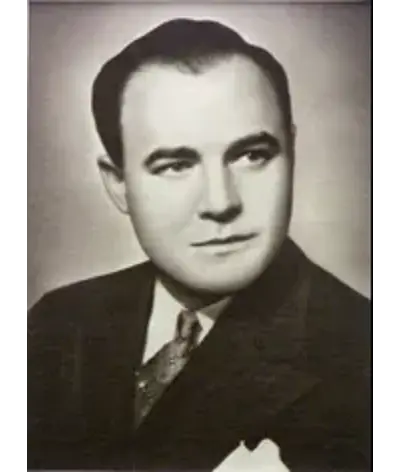
James Howard McGrath was an American politician and attorney from the U.S. state of Rhode Island. McGrath, a Democrat, served as U.S. Attorney for Rhode Island before becoming governor, U.S. Solicitor General, U.S. Senator, chairman of the Democratic National Committee, and Attorney General of the United States.
