Sugata Mitra Quotes
People are adamant learning is not just looking at a Google page. But it is. Learning is looking at Google pages. What is wrong with that?
Mitra, Sugata. Interview by Peter Stanford. The Telegraph, Telegraph Media Group, 22 Feb. 2014.


Traditional Islamic education of the time only dealt with the Koran but the skills of modern life, medicine, law, science were taught in the British secular schools, which Muslims generally would not attend. Kahn urged all is fellow Muslims to benefit from all forms of education.


The first Jewish Publication in the United States


Brunner and B. F, Skinner were the two most preeminent learning psychologists of the day. They were intellectual opponents, but both agreed with this principle, Amazing demonstrations of this principle are available throughout history. However, apparently the cost to do it can be huge and as of 2012 there has been no overall success on a large scale of the general proposition. On the other hand, set theory has been taught to Junior High School students well, and calculus is taught in many American high schools. However. while there are these spectacular results, the American education system of the early 21st century has been unable to produce basic arithmetic and algebra skills in over 20 percent of the population.

In the entire Finnish curriculum there is only one standard test required and that is in the last year of high school. Finland graduates 93% of its high school students compared to the 76% in the U. S. And Finnish students score Number 1 among all nations, much higher on International Math and Science Tests than American Students of comparable age. Test taking skills should not be confused with education. Tests are one indicator of student performance and the success of our home and schools in educating children. But in some areas we have improved test scores slightly but provided less education.


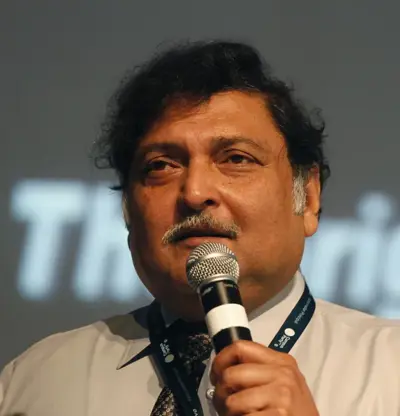
Sugata Mitra is an Indian computer scientist and educational theorist. He is best known for his "Hole in the Wall" experiment, and widely cited in works on literacy and education. He is Professor Emeritus at NIIT University, Rajasthan, India. A Ph.D. in theoretical physics, he retired in 2019 as Professor of Educational Technology at Newcastle University in England, after 13 years there including a year in 2012 as Visiting Professor at MIT MediaLab in Cambridge, Massachusetts, USA. He won the TED Prize 2013.
