Jill Stein Quotes
Pennsylvania’s election system is stacked against voters. Both the technology by which voters cast ballots, as well as the byzantine and burdensome laws determining recounts in the state, are a national disgrace. The process underway in Pennsylvania this week is hardly an effective or comprehensive recount. Despite citizens across this state stepping up and demanding their right to verify the vote, every obstacle imaginable – legal, bureaucratic and political – has been thrown in their face. Pennsylvanians’ constitutional and civil rights to have their voices heard and their votes counted have been stripped from right under them.... Together with Michigan and Wiscoinson recounts we have a political horror show.
She had petitioned for a recount of the close elections in Pennsylvania, and two other states, However, the arcane Pennsylvania election laws together with an inclination on the part of election officials in Pennsylvania not to do a recount, produced a process that was really ineffective as a check on the original vote and any errors that might ahve been made. In general, state election officials do not like recounts in Presidential elections. If the results were wrong and the stat's electoral votes should have gone to another, the politics of the state are destabilized and tust in the state election system is seriously eroded, and they are blamed. However, even if the results are not reversed, typically totals for a number of districts change and they are called upon to explain the discrepency which most often is attributed to weaknesses in the system which do not sufficiently eliminate human error, There are calls for investigations and the consequences continue, often for years. Most scientists studying the various state election processes, agree that some states systems are very weak, and there are many errors in elections, but they are rarely of sufficient magnitude toe change the results of the election. Reform of the system in many states and local areas becasue most politicans are reluctant to spemd more money on the election processes and system.
Jill Stein Press Release December 12, 2016
Sourced by: Eigen's Political and Historical Quotations


More than 80 voting machines in Detroit malfunctioned on Election Day resulting in ballot discrepancies in 59% of precincts that raise questions about the reliability of the 2016 Presidential Vote in Michigan. The state of Michigan, like many other states, would not approprate sufficient funds toi keep election equipment properly maintained. What was an irony about the 2016 Election errors in Detroit, the Michican State Law actually forbade doing manual recounts. Polioticans throughout America during that decade had been passing all kinds of legislation to prevent voting by people why were ineligible (a problem which was almsot non existant) and would do very little to get their own election commissions the equipment and personnel that they needed to avoid vote counting errors.


He was explaining why preclearance was necessary. Preclearance was a requirement that any change in the voting or registration laws, rules or procedures needed to be approved by the Federal Justice Department.


They were voting on ignoring the fraudulent vote count in Dallas County, Alabama. The counter argument was that it would disenfranchise those honest voters of the country whose votes would not then be counted.


The law required voters to have a driver’s license or other picture ID issued by the Motor Vehicles Bureau. 300,000 adults in the state did not have a license. They tended to be more frequent among the poor, the elderly, and the minorities.


The all white regular Mississippi Delegation was selected in elections where Blacks were barred from voting although Blacks were in the majority in Mississippi. In addition, the regular party was advocating obstructing the Supreme Court school integration decisions and the Civil Rights Act that had just been passed. See {637616}. The insurgent group was selected in integrated elections, contained black and white delegates, and was pledged to support and obey the laws. The President could not make the decision unilaterally, but had a great deal of influence.


The Republican Presidential Candidate in the Election of 2016, Donal;d Trump, when with only a few weeks to go before Election Day, and the polls indicated that he was substantially behind, began to give speeches like this one that included many statements that the Election was rigged against him. He presented no evidence at all, and even could not specify who was doing the rigging or how they were doing it. However, many of his followers, who tend to believe many political conspiracy theories, started to make plans for continual action after the election if Trump[ loses. For some unstable followers—all candidates for President have some—they were already planning methods of resisting if Hillary Clinton should win. To make matters worse Trump had encouraged his supporters to take extra legal action to prevent Hillary Clinton from destroying the country as they ave known it. He also announced that he would not necessarily accept the election results if Clinton won. He even threatened to have her jailed when he won the Presidency. Chertoff, a fellow Republican, was very familiar with unstable people and their oft times dangerous behavior to “protect” them, their family and the nation from some conspiracy or another. Chertoff (See Quotation 643701) and many other Republican leaders tried to persuade Clinton to refrain from such demography, but Trump was one of those people who tended not to listen to advisors or colleagues. He continued on his dangerous rhetorical path.

The Republican Presidential Candidate in the Election of 2016, Donal;d Trump, when with only a few weeks to go before Election Day, and the polls indicated that he was substantially behind, began to give speeches that included many statements that the Election was rigged against him. See Quotation 643708 as an example. He presented no evidence at all, and even could not specify who was doing the rigging or how they were doing it. However, many of his followers, who tend to believe many political conspiracy theories, started to make plans for continual action after the election if Trump[ loses. For some unstable followers—all candidates for President have some—they were already planning methods of resisting if Hillary Clinton should win. To make matters worse Trump had encouraged his supporters to take extra legal action to prevent Hillary Clinton from destroying the country as they ave known it. He also announced that he would not necessarily accept the election results if Clinton won. He even threatened to have her jailed when he won the Presidency. Chertoff, a fellow Republican, was very familiar with unstable people and their oft times dangerous behavior to “protect” them, their family and the nation from some conspiracy or another. Chertoff and many other Republican leaders tried to persuade Clinton to refrain from such demography, but Trump was one of those people who tended not to listen to advisors or colleagues. He continued on his dangerous rhetorical path.

At a Kansas State legislative hearing Kobach admitted that there only 5 cases that they had found of non-citizen voting, and 6 cases that were referred to prosecutors for alleged “double voting” (voting in Kansas and another state). The Prosecutors refused to go ahead with any of the alleged charges for lack of evidence. Mr. Kobach had a unique definition of “many, many”.


This quotation from Judge Posner was particularly meaningful because previously the judge had ruled that Voter ID was constitutional. Subsequently, Voter ID laws were passed by a number of states where many of the sponsors were found to intend voter suppression. Also, it was the case that there were so few voter fraud cases in the entire country that it was highly unlikely that for the prevention of a handful of improper votes all the money would be spent by the states to implement the Voter ID laws. The real motivation was most experts concluded was voter suppression. Posner had come to that conclusion also as this quotation demonstrates.


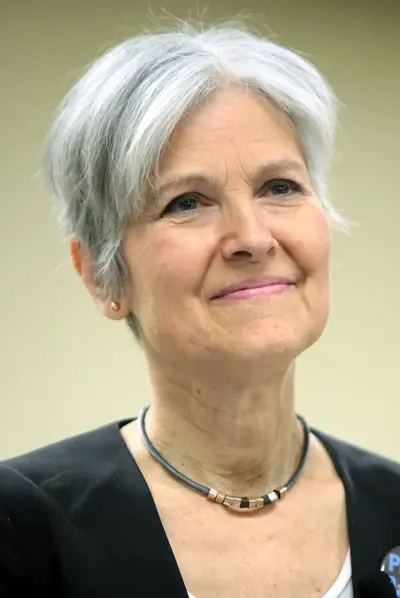
Jill Ellen Stein is an American physician, activist, and former political candidate. She was the Green Party's nominee for President of the United States in the 2012 and 2016 elections and the Green-Rainbow Party's candidate for governor of Massachusetts in 2002 and 2010. During her campaigns for President, she campaigned on the theme of a Green New Deal which included a number of reforms to address climate change, income inequality as well as civil and political rights reform. In 2012, Stein was on the ballot in 37 states and received 469,501 votes (0.36% of the popular vote). In 2016, she was on the ballot in 45 states and received 1,457,216 votes and 1.07% of the popular vote.
