James Fenimore Cooper Quotes
Party leads to vicious, corrupt and unprofitable legislation, for the sole purpose of defeating party.
James Fenimore Cooper, 1789-1851, Writer, The American Democrat, 1838
Sourced by: Eigen's Political and Historical Quotations


Despite his fears, that is exactly what happened. Ironically, he himself was the focus of much dissatisfaction with the administration, and the Federalists led by Adams and the Democratic Republicans led by Jefferson opposed each other, ousting Adams.


The Congress was in a hyper-partisan gridelock and was unable to pass most legislation.

The Republicans who won control of Congress in 2000 with a Republican President had campaigned on the principle of smaller government and no deficits. In the next 8 years they spent more than any Congress in history and twice as much as President Clinton had in the previous 8 years not counting military spending and entitlements which were much greater.

The Republicans had been badly beaten in the 2012 Presidential Election. Many attributed the loss to the dissatisfaction of the electorate with the Republican ideas which had become more and more conservative in recent decades. Others, like Rubio, wanted to maintain the existing ideas which were very different from the Republican ideas earlier when they won more elections.

DeLay had been forced to resign from his leadership position when he was criminally indicted. Months later after his former aids admitted criminal activity, he resigned from the Congress but claimed innocence. Then he was convicted. Always an extreme partisan, he was firm in his disdain for Democrats and bipartisanship or compromise of any kind.


The George W. Bush administration had a strong penchant for loyalty and would not fire Republican officials who had proved incompetent or unethical. In the midst of a disastrous Iraq War, there was a sex scandal in the House of Representatives whereby a Republican member was making homosexual advances to young pages. The House Republican leadership had tried to cover it up rather than protect the pages. Yet no one was fired even after the Congressman resigned and admitted it.
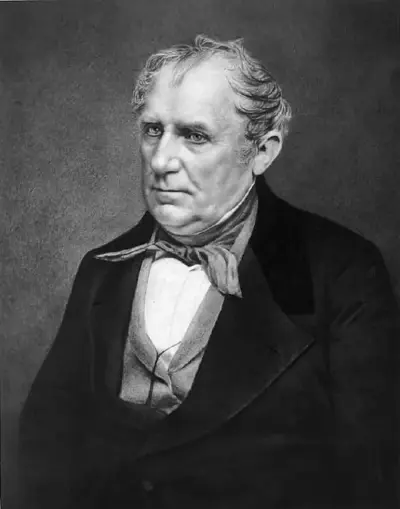
James Fenimore Cooper was an American writer of the first half of the 19th century. His historical romances depicting frontier and Native American life from the 17th to the 19th centuries created a unique form of American literature. He lived much of his boyhood and the last fifteen years of life in Cooperstown, New York, which was founded by his father William Cooper on property that he owned. Cooper became a member of the Episcopal Church shortly before his death and contributed generously to it. He attended Yale University for three years, where he was a member of the Linonian Society.
