Mahatma Gandhi Quotes
Palestine belongs to the Arabs in the same sense that England belongs to the English or France to the French. It is wrong and inhuman to impose the Jews on the Arabs... Surely it would be a crime against humanity to reduce the proud Arabs so that Palestine can be restored to the Jews partly or wholly as their national home
Gandhi, Mahatma. "The Jews." Harijan, 26 Nov. 1938, p. 359.


A minority of Jewish Israelis do not recognize the United Nations 1949 partition boundaries of the land creating modern Israel. They believe that God gave all the land to the Jewish people—as described in the Bible. Therefore, to them, the West Bank is a part of Israel. No Israeli government has ever maintained that position. However some governments which depend on settler and ultra-Orthodox support do not publicly disavow the position. Palestinians, look with alarm, on this view and the constant attempts at encroachment on West Bank land that the settlers attempt. Like the extremist Palestinians who want to sabotage any two-state solution, there is a minority of Israelis who do the same. These two groups made the peace process very difficult as their adherents are not only very passionate about their views, but have political influence out of proportion to their relatively small number of voters.

Commenting on Israel's right to exist:


A major issue amongst Israeli’s is to how they should relate to those hostile Islamic nations in their area who claim they are at war with Israel or the Jewish People. This position in effect says that the oratory of those Islamic groups that claim that they are in a war—a holy war even—should be taken at their word and treated as a wartime enemy and Israel should actively attempt to kill and destroy them.


_0_thumbnail_47x47.jpg)
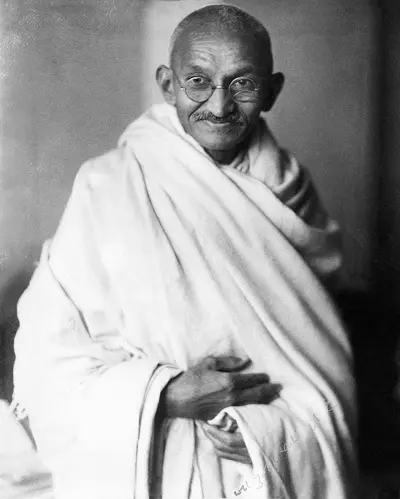
Mohandas Karamchand Gandhi was an Indian lawyer, anti-colonial nationalist, and political ethicist, who employed nonviolent resistance to lead the successful campaign for India's independence from British rule, and in turn inspired movements for civil rights and freedom across the world. The honorific Mahātmā (Sanskrit: "great-souled", "venerable"), first applied to him in 1914 in South Africa, is now used throughout the world.
