John L. Lewis Quotes
Out of the agony and travail of economic America the Committee for Industrial Organization was born.
Lewis, John L. "Labor and the Nation." Vital Speeches of the Day, vol. 3, no. 23, 15 Sept. 1937, p. 731.

He had squads of thugs that he would “rent” out to other gangsters for their enforcement activities and to unions to protect themselves from goons and intimidate non union workers. However, he would not let his men work as goons and strike busters or for companies—despite huge pay offers—to keep their workers in line, a common practice at the time.


This quotation is extremely subtle. Vidal tells us that he has always hated organized labor. He also tells us that the media has always given us one monolithic view of organized labor. He is silent as to whether that view was accurate and justified or in his mind or whether he was just going along with the image created by the media. There is no answer, but it is a quotation that is food for thought. Numerous studies found that at the beginning of the 21st century, the public view of labor union crooked and/or communist leaders was much worse than reality.

Nor did they have much inclination. Organized labor was one of the most sexist institutions in society. Working class men have been major beneficiaries of the “inferiority” of women. At the low end of the hierarchy at work, the working man had only one place where he was at the top of the hierarchy: In his home as the master of his wife and children. And labor organizations evolved from conceptually thinking they were representing the workers of the world in a struggle with the managements to where they were protecting and working for their existing membership against all others and women were outsiders trying to get in and compete with the men. Some men were so macho that the did not want to face the fact that a “lowly woman” could possible do their job That diminished their skill level and self-image.


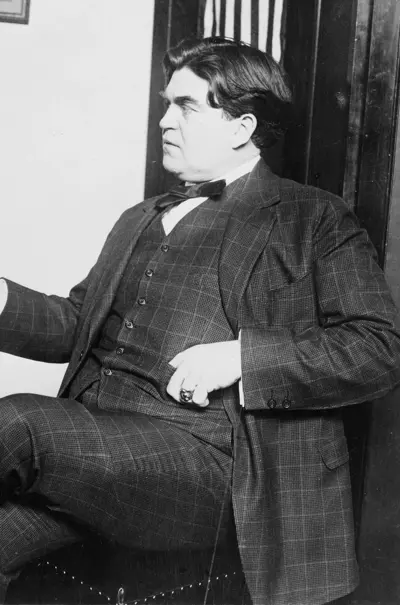
John Llewellyn Lewis was an American leader of organized labor who served as president of the United Mine Workers of America (UMW) from 1920 to 1960. A major player in the history of coal mining, he was the driving force behind the founding of the Congress of Industrial Organizations (CIO), which established the United Steel Workers of America and helped organize millions of other industrial workers in the 1930s, during the Great Depression. After resigning as head of the CIO in 1941, Lewis took the United Mine Workers out of the CIO in 1942 and in 1944 took the union into the American Federation of Labor (AFL).
