Sun Yat-sen Quotes
Our youths are constantly trying to learn everything the West has to teach, but what is newest in the West has existed in China for thousands of years.
Sun, Yat-sen. San Min Chu I: The Three Principles of the People. Translated by Frank W. Price, Commercial Press, 1927, p. 121.


While this type of modernization had been a theme of her reign, it was particularly fascinating at this time when China had been invaded by Japan and 7 Western Countries, she still argued that the only way for China to thrive and attain true independence was to reform and adopt many Western Ways. Chinese leader after her gave lip service to doing this but never wanted to implement the reforms lest the lose power. Ironically, it was under Communist leader Deng Xiaoping, 1904-1993, that Cixi’s notion of adopting modern Western economic and technological models and approaches was finally implemented and then China made the greatest improvement of any large society ever in a relatively short term. However, Deng stopped short of adopting Western notions of political freedom.

His views are a mix of modernism and fundamentalism. He favors democracy and elections but also favored the Taliban destroying the great ancient Buddha statues when he was called an idol worshipper for urging the preservation of art.

10 centuries ago was a time when the Arabs were far more advanced and modern than other cultures including the Christian West that was in the Dark Ages. However, in the 12th century there was a “closing”—a narrowing of allowable Islamic thinking, and since then, Islamic people have had great difficulty with change or modernity. Not all Muslim nations are equally rigid but the Arabs are at the extreme among Islamic counties.


In early America large numbers of whites who had been captured by Indians would refuse to leave their new families even when they had the opportunity to do so. J. Hector St. John
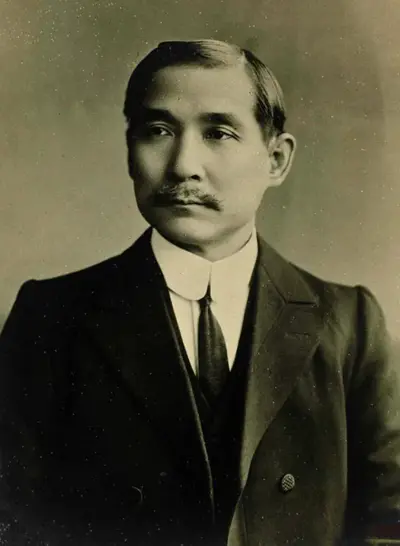
Sun Yat-sen was a Chinese statesman, physician, and political philosopher, who served as the provisional first president of the Republic of China and the first leader of the Kuomintang (Nationalist Party of China). He is referred as the "Father of the Nation" in the Republic of China, and as the "Forerunner of the Revolution" in the People's Republic of China for his instrumental role in the overthrow of the Qing dynasty during the Xinhai Revolution. Sun is unique among 20th-century Chinese leaders for being widely revered in both mainland China and Taiwan.
