Deeyah Khan Quotes
Our freedoms are shared freedoms: they are bound up in each other. The ability to confront oppression in the guise of religion is linked to our ability to worship as we choose: both are acts of expression.
Khan, Deeyah. "Welcome to sister-hood." sister-hood, Fuuse, 2016.

Williams was the first theologian who not only advocated religious toleration but argued that Christianity demanded it and the separation of church and state.


New Ross was under siege by Cromwell and his English Parliamentarian troops. After two days, the town tried to negotiate terms of surrender and one of the main things they asked for was freedom of religion to practice Roman Catholicism. This famous response set the stage for religious bigotry over the next years. Cromwell’s reasons for not allowing Catholicism to be practiced was not only one of religious zeal. At the time, the Roman Catholic Church was a major geopolitical power under a Pope who commonly supported or even dispatched troops for geopolitical and religious ends. The Vatican was particularly resentful of England for separating from the Church and asserting that the King of England was the head of the Church and not the Pope. Therefore Cromwell and many Englishmen had to deal with the reality that every practicing Catholic in the realm was a potential spy, traitor, and/or rebel. This fear of control of countries by the Pope strongly affected America, and was responsible for the defeat of the first Catholic Presidential Candidate, Al Smith. It was also a major factor in the election of John F. Kennedy so he dealt with it head on.


Abdul Rahman, Afghan citizen, had converted from Islam to Christianity 16 years before. Conversion from Islam is a capital crime under Sharia Law which was the law of Afghanistan even after the Taliban had been overthrown. He was jailed and threatened with death. Statements like this and others made directly to the government persuaded the Afghan politicians to go against their mullahs who demanded the death penalty as is proscribed by Islamic Law—Sharia. The judges tried to get Rahman to recant and he would not (see {589518}). So they finally decided that he must be mentally insane and therefore could not be tried, and the problem was solved that way.


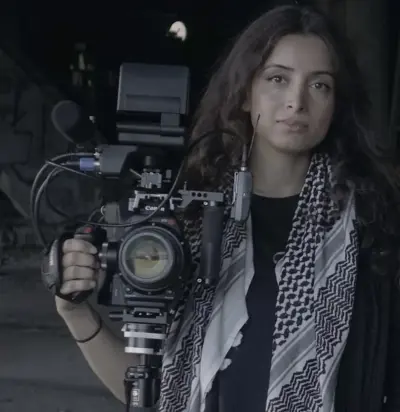
Deeyah Khan is a Norwegian British documentary film director and human rights activist of Punjabi/Pashtun descent. Deeyah is a two-time Emmy Award winner and the recipient of two BAFTA nominations and has received the Royal Television Society award for Best Factual Director. She has made six documentaries to date, all have been shown on ITV in the UK as part of its Exposure series.
