Mike Quigley Quotes
Opening up the Capitol dome and giving the public a look at the inner workings of Congress - however messy they may be - certainly won't be pretty. But trust isn't earned by showing off only your Sunday best. The dirty laundry has to be aired, too.
Quigley, Mike. "Airing Congress' Dirty Laundry." HuffPost, 18 Mar. 2010.


The Senate was debating the Senate Rules which allowed individual Senators to anonymously stop any Senate matter without ever identifying themselves and keeping the information that they were blocking a bill or nomination from the Senator’s own constituency.


In 1814 the British burned Washington including the capitol building. President Madison arranged for the senate to meet in Blodgett's Hotel, on Eighth and E Streets, Northwest. Some of the senators felt that the setting was inappropriate for the conduct of senatorial business. Fromentin disagreed.


While there are dramatic exceptions such as during the Nixon and George W. Bush administrations, compared to most other nations were the indicator of official lying is a leader’s lips moving, the United States is among the leading nations with respect to official deception of the citizens.


Samuel Langhorne Clemens, 1835-1910

At the time there was no Secrecy & Classification System nor any laws enforcing secrecy or confidentiality. However there was no freedom of information laws of expectations even on the part of journalists. This was the first Freedom of Information policy of the American government. Some politicians were more open than others but there was no national, governmental before this. There were however leakers and whistleblowers though the terms were not in use. Note that Roosevelt herein created the first whistle blower protection—himself.


Her immediate reference was to George W. Bush and his administration who had not been candid with the American people as to the reasons for the Iraq War


The intelligence agencies had in many cases not shared critical information with the oversight committees and the White House and in a number of cases actually lied to them.
_0_thumbnail_47x47.jpg "Statue of Robert Hall in Leicester.")
For many people the implication of this quotation is that there should be no government secrets withheld from the citizens who have the right to examine. Others argue that government may have temporary secrets to protect against foreign enemies for example, but that these must be declassified very promptly so that the citizens can examine the actions of their government in time to replace the government if they are not satisfied. Almost all government officials tend to reject the first implication out of hand, and grudgingly accept the second with their discretion controlling when declassification should take place. The problem of America is twofold. There is much over-classification (material kept secret that should not be at all), and the time till declassification is long in general and truly absurd in many cases. For example, there are documents from WWII that by 2013 had still not been declassified. See {591444}, {641317}, and {589105} for exemplar views. William Jennings Bryan introduced this principle into the American political dialogue. See {641027}.

There were many critics who were concerned that the ITU was trying to regulate the Internet, but no one could be sure as the proceedings and meetings of the ITU are not publicly available. This is a classic UN problem. They see themselves as representing governments and not people. The Governments have the information and so they delude themselves into believing that they are transparent, when the reality is that for the individual they are totally opaque. Most critics who worry about UN regulation of the Internet, are just as concerned with what other countries are proposing than what there own government’s position is. And most governments themselves do not release the actual transcripts or proceedings of the ITC meetings but only documents giving their positions. This is an example of secrecy being promoted as transparency where the UN covers for member nations who want to maintain secrecy.


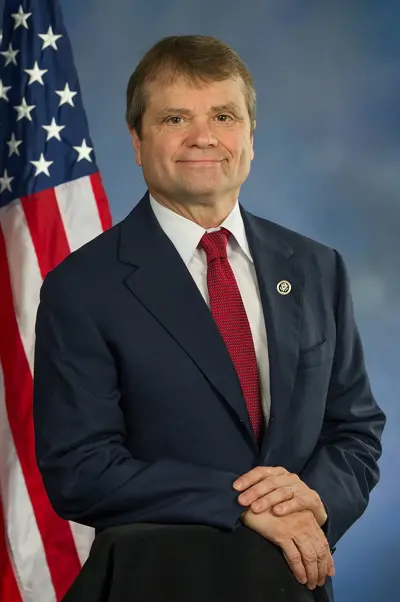
Michael Bruce Quigley is the U.S. Representative for Illinois's 5th congressional district, serving since the April 7, 2009 special election. The district includes most of Chicago's North Side, as well as several of the city's western suburbs. He is a member of the Democratic Party. Quigley is a former member of the Cook County Board of Commissioners, where he represented Chicago's northside neighborhoods of Lakeview, Uptown, and Rogers Park. He also teaches environmental policy and Chicago politics at Loyola University Chicago.
