Friedrich Hayek Quotes
Once politics become a tug-of-war for shares in the income pie, decent government is impossible.
Hayek, Friedrich A. Law, Legislation and Liberty, Volume 3: The Political Order of a Free People. University of Chicago Press, 1979, p. 150.


A minority of newly elected ultra conservative Tea Party Republicans intimidated most of the main line Republicans by threatening to run against them in their primary elections. The result was that almost no legislation was passed and there was a constant drumbeat of attacks against anything the government was doing or might do in the future. Public confidence in government was driven very low, with only the public confidence in Congress lower. The Democrats who could accomplish very little in that circumstance became very unpopular while the Republicans were even more so. However, many Tea Party Republicans viewed that as a victory as their major objective is to enfeeble government—especially the Federal government.

It has become so expensive for a member of Congress to conduct a campaign, for many members, raising money is their number one priority. To make matters worse, more and more members are being challenged in primaries for their own party’s nomination. In 2010, John McCain, the Republican Party presidential standard bearer, and veteran Senator was challenged for his party’s Arizona Senate nomination, He had to spend $20 million on his primary campaign in a small “inexpensive” state. Then he had to spend even more in the General election against his Democratic opponent. Almost everyone agrees that it is a terrible burden for the men and women of Congress, but no one quite knows how to solve the problem and still adhere to the First Amendment.

We live in a time where people are losing confidence in the ability of Government to solve problems.
The public confidence in government had hit an historical low during the administration of George W. Bush during which his administration was riddled with ideologues who had little competence and less inclination to solve problems. However even in those cases where the Bush administration wanted to succeed, they usually failed producing such fiascos as Hurricane Katrina, the aftermath of the invasion of Iraq, shipping nuclear weapons components my mistake to Taiwan, illegal disclosure of the identity of CIA covert agents, and others.

At the time Jesse Helms, an arch conservative, was a very powerful senator with a great deal of seniority. As such most senators had to work with him to get many things done. Ironically, despite the fact that he and Helms were on polar opposite political sides, they developed a personal working relationship which was quite cordial.


See {598081} for a similar idea expressed by his wife Hillary.

Congress at that time had about a 12 percent public approval rating. Other emergency disaster appropriations had been made in previous years in days or weeks, but the aid for New Jersey, New York and Connecticut had been voted by the Democratic-controlled Senate but not in the Republican controlled House. The Republican House leadership had planned a vote after the Fiscal Cliff vote the previous evening before the end of the Congressional term. Then the speaker cancelled the vote infuriating Christie and many of the members of Congress. His reason was that there was opposition from the Tea Party Conservative wing of his own party who had just been badly beaten on the fiscal cliff legislation, and the Speaker was up for reelection by his own party caucus the following day. If the vote had proceeded, it would have passed with Democratic and some Republican support but with the opposition of the conservative wing some of whom noted that the states seeking the emergency aid had just recently voted for President Obama and they were opposed to more federal spending despite the fact that emergency aid had never before been subjected to such partisan criteria. After much pressure, the Speaker then committed to an up or down vote in the following Congress to the chagrin of some of the Tea Party members. Governor Christie, much admired for his commitment to his state and not politicking was his candid self but he did not even go as far as Republican Congressman Peter King {630995}.


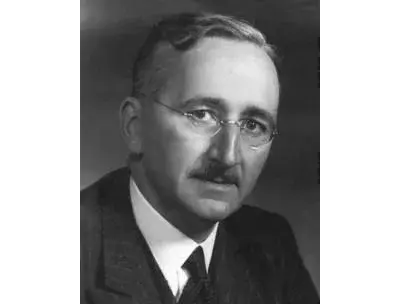
Friedrich August von Hayek CH FBA, often referred to by his initials F. A. Hayek, was an Austrian-British economist and philosopher who is best known for his defence of classical liberalism. Hayek shared the 1974 Nobel Memorial Prize in Economic Sciences with Gunnar Myrdal for his "pioneering work in the theory of money and economic fluctuations and [...] penetrating analysis of the interdependence of economic, social and institutional phenomena". His account of how changing prices communicate information that helps individuals co-ordinate their plans is widely regarded as an important achievement in economics, leading to his Nobel Prize.
