David Hume Quotes
Nothing is more usual than to see parties, which have begun upon a real difference, continue even after that difference is lost
David Hume, 1711-1776, Scottish Philosopher & Historian, Of Parties in General
Sourced by: Eigen's Political and Historical Quotations


Of the different kinds of political parties, the one that was formed on principles was at that time a new notion. Hume was particularly skeptical of those as the tended not to be as amenable to compromise as parties unified by simple vested material interests.


His use of the noun “Democracy” refers not to a form of government but the specific institution of the Democratic Party. Smith, like many of the Founding Fathers was deeply suspicious of political parties. See also {614907}. Smith had written to most of the then likely Presidential candidates of both major parties asking for their position on the Mormons who were facing persecution wherever they went. None of the politicians would make any satisfactory commitments. Smith took Direct Action and became the only major religious official to have run for the Presidency of the United States until Pat Robertson tried and failed in 2000. Smith’s assassination shortly thereafter cut his run for the Presidency short before it made much headway and politically he had no chance to affect the race.
Early political philosophers were very concerned about the conflicts that would be engendered in society by political parties. Many of the Founding Fathers had similar suspicions.


The Tea Party Republican faction was opposed to government doing much of anything other than Defense and Foreign Policy. The regular Republicans saw a much more extensive and robust role of government though few did so to the same extent as Abraham Lincoln and the other founders of the Republican Party, and Theodore Roosevelt and Dwight D. Eisenhower the Republicans following in the Alexander Hamilton tradition.

“Republicans” then referred to strong opponents of not only monarchy, but opposed a strong Presidency and federal government. The Federalists who supported John Adams for reelection to a 2nd term, were trounced so badly that it was the end of the Federalist Party. Their attacks on Jefferson had been particularly vicious with the hyperpartisanship as bad as in the early years of the 21st century. Jefferson tried to unify the nation with this quotation. It helped but there was still much bitterness.

By secret societies, de Tocqueville meant societies or organizations where the membership was secret. He was not referring to organizations like the Masons which had secret oaths and rituals. Secret societies had historically been destabilizing forces in societies. At the time this was written, there were no secret societies in America, but in 1855 a major one developed—The American Party whose members were better known as “Know Nothings” as when they would be asked anything about the party and its organization of beliefs, they would claim that the knew nothing. They were virulently anti-immigrant and anti-Catholic. Subsequently, there have been secret organizations in American politics from time to time, but they have generally been few compared to other countries, and their influence was not long lasting. Most recently, quirks in legal decisions and their interaction with the Constitution have produced non profit organizations which are financed and influenced by unknown people. The major officials of the organizations are known but the members and contributors are secret. These organizations then operate campaigns, most often to attack and damage the reputation of politicians running for political office—most frequently, the Presidency.

There are many democracies that have run into this problem at many times. Even the United States had situations like this. The Adams-Jefferson Presidential Contest caused President Adams to curtail civil rights so he could not be as viciously attacked. The polarization after the first Black was elected president in 2008 was another period of destructive contention and polarization.


1st Earl of Beaconsfield
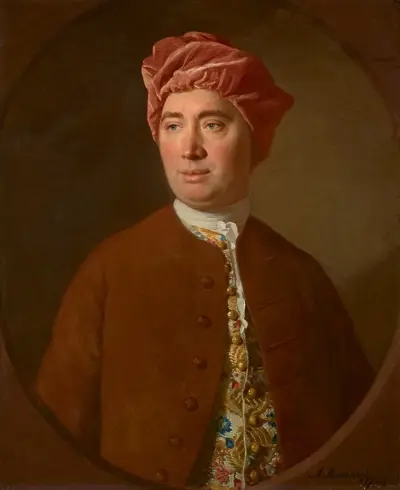
David Hume, Hume strove to create a naturalistic science of man that examined the psychological basis of human nature. Hume argued against the existence of innate ideas, positing that all human knowledge derives solely from experience. This places him with Francis Bacon, Thomas Hobbes, John Locke, and George Berkeley as a British Empiricist.
