Neville Chamberlain Quotes
Not a lovable people. I don’t care for them myself.
Chamberlain was the British Prime Minister (before Churchill) who so disgracefully appeased Hitler leading to WWII. It is not known if Chamberlain’s anti-Semitic attitude had anything to do with this perceptions and actions regarding Hitler and Germany.
Neville Chamberlain, 1869-1940, British Prime Minister (Conservative), His view of Jewish People, Quoted in Martin Gilbert, Churchill and the Jews, 2007
Sourced by: Eigen's Political and Historical Quotations

He is referring to Niels Bohr.


1st Earl of Beaconsfield. O’Connell was an Irishman.
Baldwin when Prime Minister would not arm England to stop Germany and after he left office, supported his successor, Neville Chamberlain, in his peace efforts which turned out to be appeasement, See {626936}.


Lyndon Johnson was unhappy with his low popularity and asked some advisors why it was that people didn't seem to like him:

This quotation tells us more about Nixon than Reagan. The latter was known for his extraordinary affability. Even his political enemies enjoyed and sought out his company. Nixon in contrast, no one liked to be around on a personal basis. His inner circle pandered to him to ingratiate themselves and jockey for power and influence but few liked him. Reagan and FDR are at the top of most people’s Presidential affability list while, Nixon fights it our with a few fro last place. Often brilliant at politics, Nixon’s people skills and his interpersonal perceptions were terrible.
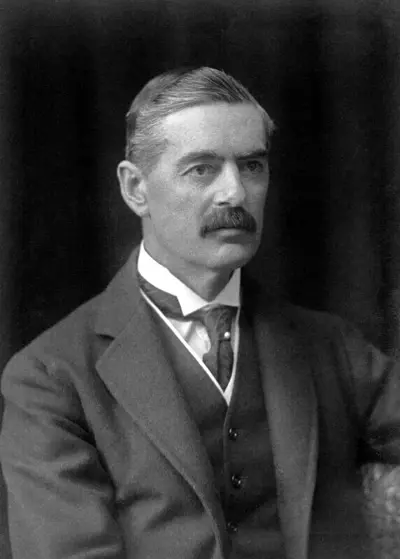
Arthur Neville Chamberlain FRS was Prime Minister of the United Kingdom and Leader of the Conservative Party from 1937 to 1940. He is best known for his foreign policy of appeasement, and in particular for his signing of the Munich Agreement on 30 September 1938, conceding the German-speaking Sudetenland region of Czechoslovakia to Germany. Following the German invasion of Poland on 1 September 1939, which marked the beginning of World War II, Chamberlain announced the declaration of war on Germany two days later and led the United Kingdom through the first eight months of the war until his resignation as prime minister on 10 May 1940.
