Edmund Burke Quotes
Nobility is a graceful ornament to the civil order.
Edmund Burke, 1729-1797, Irish Orator & Member of the British Parliament, Reflections on the Revolution in France, 1790
Sourced by: Eigen's Political and Historical Quotations


Maria, after being ousted by her former friend, General Baldomero Espartero, comments on his lack of respect.


1st Earl Lloyd-George of Dwyfor


John Adams was more concerned about the titles and forms of address of the President and Vice President than most of the Founding Fathers. Having spent time in London and Paris representing the nation, he was concerned about the dignity and symbolism of office. McCullough added this insight.


Chivalry was a set of rules that regulated the behavior of knights especially as to their behavior in battle. It was the Medieval equivalent of the Geneva Convention. At the time knights fought against knights and peasants fought against peasants. After time the fighting was mixed. Previously, if a knight was subdued by other knights, he would surrender and promise to fight any more and that would be honored. But when a small group of peasants brought down a knight in armor, he could not surrender. He had probably killed other lightly armored peasants who were friends, and the peasants did not trust the knights. So typically, the peasants just killed the fallen knight. Social class determined the concepts of honor, fairness, trust, and chivalry came to an end.


Eggleston was an accomplished writer who had served in the Confederate army of the Civil War. 20 year after the war he wrote a series of articles for the prestigious Northern Atlantic Monthly trying to convey the war from the Southerner’s point of view.


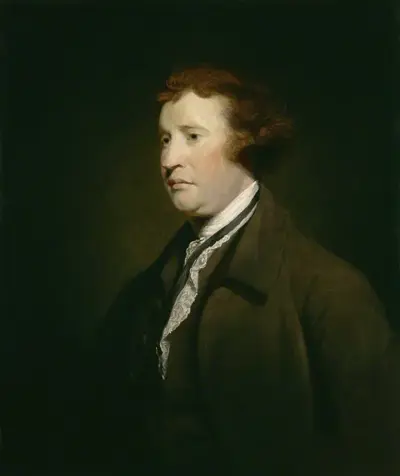
Edmund Burke was an Irish statesman, economist, and philosopher. Born in Dublin, Burke served as a member of parliament (MP) between 1766 and 1794 in the House of Commons of Great Britain with the Whig Party after moving to London in 1750.
