Thomas Paine Quotes
No person ought to be in a worse condition when born under what is called a state of civilization, than he would have been had he been born in a state of nature
Paine observed that there were many people worse off in England and other civilized countries than they would be if born in a primitive culture. To him this was a failure of civilization.
Thomas Paine, 1737-1809, British American Political Philosopher, Agrarian Justice, 1796
Sourced by: Eigen's Political and Historical Quotations


This was one of the favorite quotations of Thomas Jefferson who copied it into his Commonplace Book.


This was a classic debate over universal male suffrage. Rainborough had made a forceful argument for equality as a spokesperson for the Levellers in this famous debate. Ireton (See {619711}) eloquently gave the classic counter-argument that property owners had much more at stake and therefore should have much more of a say on governmental affairs. Early America actually sided with Ireton but modern America holds with Rainborough.

In 1877 Wasburn was dropped from the List of Ministers by the Unitarian Church. He had become quite atheistic.

At the height of the Great Depression there were conservative politicians who were opposed to any form of relief or assistance for those in need. Their grounds were that if people got something for nothing, they would lose their moral compass—they would be demoralized. Lady Mosley, who was a member of one of the wealthiest families in England, embarrassed the opposition Conservatives by observing that the upper classes have gotten something for nothing for years and the moral base was still intact.


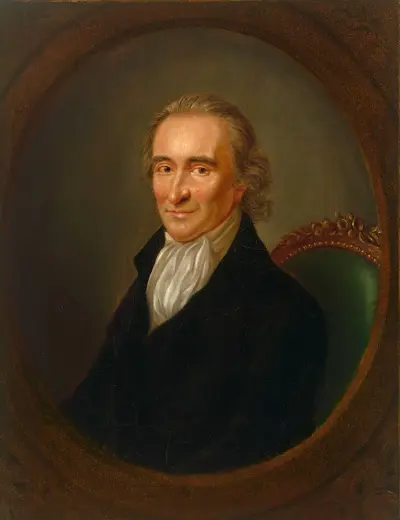
Thomas Paine was an English-born American political activist, philosopher, political theorist, and revolutionary. He authored Common Sense (1776) and The American Crisis (1776–1783), the two most influential pamphlets at the start of the American Revolution, and helped inspire the patriots in 1776 to declare independence from Great Britain. His ideas reflected Enlightenment-era ideals of transnational human rights. Historian Saul K. Padover described him as "a corsetmaker by trade, a journalist by profession, and a propagandist by inclination".
