Jascha Heifetz Quotes
No matter what side of an argument you're on, you always find some people on your side that wish you were on the other side.
Byrne, Robert, editor. The 1,911 Best Things Anybody Ever Said. Fawcett Columbine, 1988, p. 302.


Gingrich, a hyper partisan politician who himself was a polarizing figure himself, considered any objective that might gain any partisan advantage at all. Once he actually shut down the government by not appropriating any money in the House to embarrass President Clinton, but this backfired and thereafter Gingrich was pushed out of Congress by his own party.

At that time Brown’s Republican Party was dominated by extreme conservatives who tended to attack the character and motivation of anyone who did not agree with them—including members of their own party. Brown however came from a state with a strong Republican tradition of liberalism, which however then had a majority of Democrats as most of the liberal Republicans had been driven out of the party by the Republican extremists. At the time, the Republican party had become so extremist that many thought him disloyal to the part for making this statement. The Tea Party credo then as good people do not support evil and immoral policies and they tended to see almost all policies in moral and ethical terms.


He was referring to the 2016 Presidential Campaign Politifact showed that Hillary Clinton’s facts were not valid and truthful 25 percent of the time and Donald Trump’s were false more than 70 percent of the time. Never before have there been so many falsehoods exchanged in a Presidential Campaign.

At the time, there was great debate about Christian theology and most of it was about esoteric and in the Emperor’s view not very important matters. Over a millennium before the Protestant Reformation, there were huge sectarian religious dissents among the Christians. One was on exactly how Easter was to be celebrated, for example.

As the Majority Leader of the House, Eric Cantor had to resolve conflicts and for coalitions that will compromise to get anything done. However, the Tea Party movement didn’t want any compromises even if it meant shutting down the government and defaulting on the national debt. They ran against conservative Republicans in the Republican primary elections campaigning that the incumbent made and facilitated compromises with Democrats. In some districts like Eric Cantor’s there were enough primary voters who agreed. Terry was explaining the message that the other conservative politicians received.


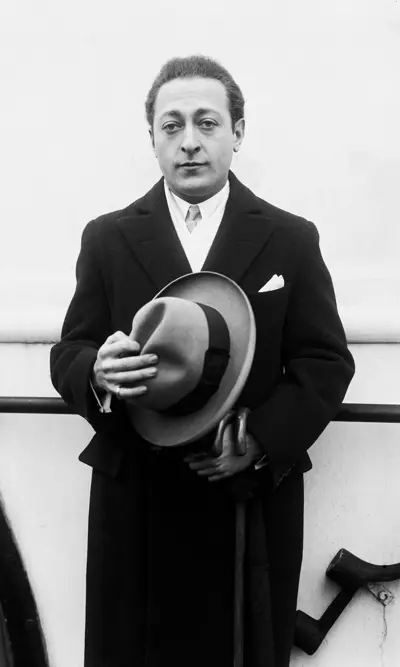
Jascha Heifetz was a Russian-American violinist. Born in Vilna (Vilnius), he moved as a teenager to the United States, where his Carnegie Hall debut was rapturously received. He was a virtuoso since childhood—Fritz Kreisler, another leading violinist of the twentieth century, said on hearing Heifetz's debut, "We might as well take our fiddles and break them across our knees."
