Quanah Parker Quotes
No like Indian school for my people. Indian boy go to Indian school, stay like Indian; go to white school, he like white man. Me want white school so my children get educated like whites.
At the turn of the century Parker raised the school integration issues of Brown v. Board of Education 50 years earlier.
Quanah Parker, 1852-1911, Comanche Indian Chief
Sourced by: Eigen's Political and Historical Quotations


Bilbo was one of the worst racists who ever served in the Congress.

Samuel Langhorne Clemens, 1835-1910. Twain was one of the few whites who realized that success in assimilating American Indians would destroy their culture and identity. Even today, whites and Indians alike constantly debate the desirability of assimilation policies and supporting independent reservations.
There are few people today who could believe that a United States senator would castigate the head of a Federal Agency for spreading “racial equality propaganda.” But at the time—1943—the actions of Education Commissioner John W. Studebaker and his Assistant took remarkable courage.


Sumner would later become a Senator. However over a century before Brown v. Board of Education finally outlawed segregated schools, Sumner made one of the basic legal arguments that was involved in the case.


Miller was the first Black American admitted to a Graduate Program—Johns Hopkins—in Mathematics


Most immigration reformers want to open immigration more widely. Ward wanted immigration restricted to certain ethnicities and limited. He wanted a uniformity of assimilation and not diversity.

This quote illustrates the Southern segregationist view in the Jim Crow South.


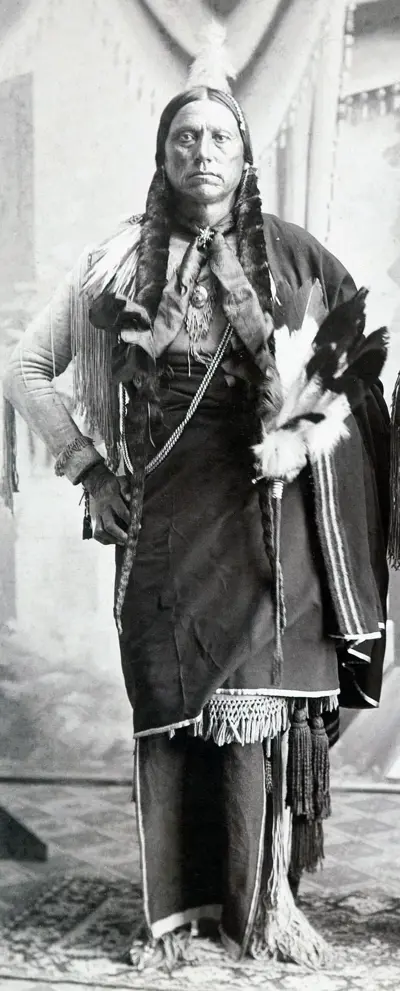
Quanah Parker (Comanche kwana, "smell, odor") was a war leader of the Kwahadi ("Antelope") band of the Comanche Nation. He was likely born into the Nokoni ("Wanderers") band of Tabby-nocca and grown up among the Kwahadis, the son of Kwahadi Comanche chief Peta Nocona and Cynthia Ann Parker, an Anglo-American who had been kidnapped as a child and assimilated into the Nokoni tribe. Following the apprehension of several Kiowa chiefs in 1871, Quanah Parker emerged as a dominant figure in the Red River War, clashing repeatedly with Colonel Ranald S. Mackenzie. With European-Americans hunting American bison, the Comanches' primary sustenance, into near extinction, Quanah Parker eventually surrendered and peaceably led the Kwahadi to the reservation at Fort Sill, Oklahoma.
