Hossein Shariatmadari Quotes
… negotiating with America is like shaking hands with Satan, and dancing with wolves, because the Americans are interested in negotiations for negotiations' sake....By negotiating with us, they are trying to intimidate the world of Islam and the Islamic movements, saying: "Even Islamic Iran, which you follow and which serves as your model, eventually had no choice but to get along with us.”
Shariatmadari sometimes serves as a spokesman for major Religious officials of the Iranian theocracy. This quotation is particularly interesting as it illustrates a particular world view of some Iranian leaders that makes it almost impossible to cope with problems through diplomatic means. The argument is that if Iran negotiates with America on any issue, Iran would be a poor example to other Islamic nations because they would conclude that Iran and all Muslim countries had no choice but get along with America. The idea that negotiating with a nation means that a country is “getting along” with the other country is of course the absurdity. But it is believed by many in the Muslim world. Ironically that same view is held by “hard liners” in America and most other countries in addition to Iran. There are Americans who do not believe that we should negotiate with Iran at all because the negotiations gives them a status that they do not deserve. And it connotes a level of approval by America of Iran just to talk with them.
Hossein Shariatmadari, Iranian Writer & Editor, May 2007, Quoted in Memri, 2007
Sourced by: Eigen's Political and Historical Quotations

This is a statement that was meant as a criticism but would be interpreted by many Americans as just a straight forward description. Many believe that is the way it should be.


Terrorists in Iraq had murdered the Egyptian Ambassador a few weeks before. Although not generally known, being a diplomat in a foreign country has substantial risk.
At the time the United States was leading a very effective set of economic sanctions against Iran for the express purpose of pressuring them to abandon their nuclear development program that could also be used for nuclear weapons development.


At the time Pakistan was almost a failed state which had nuclear weapons. They took large amounts of American aid (military and civilian) and claimed that they were an ally in the War on Terror. On some occasions they deployed their troops against fundamentalist terrorists. On others they shielded terrorists and provided them with sanctuary from attack, intelligence and allowed terrorist leaders to not only live in Pakistan but operate their organizations from Pakistan. They supported radical Madrassas (religious schools) that taught hate and terrorism, and armed terrorists in the hopes that they could be used against their enemy India while the terrorists themselves killed more Pakistanis by far than the Indians ever did. The civilian government was subservient to the military which itself was subservient to the Intelligence Arm.


Some people believe that the United States pressured Pakistan to enable America to support the Mujahideen in their effort to fight the Russian occupation of Afghanistan. Actually the President (and virtual dictator) of Pakistan wanted aid from America and was offering bases. America did not want bases but did want a platform for arming and training the Mujahideen, Pakistan allowed us to use Pakistan as a platform. We increased our foreign aid to Pakistan by 500 percent. There was no arm twisting.
Bhutto, after Pakistan’s defeat by India, initiated a massive nuclear bomb development program which was contrary to the Nuclear Non-Proliferation policy of the United States. Bhutto went ahead anyway and soon Pakistan had a nuclear capability, much to the distress of the other nuclear powers in the world.


The quotation is notable as it illustrates the great difficulty that modern democracies have with extreme Islamic fundamentalists. Their very perception and world view is so different that often we think of the extremists as insane and they often feel the same way about us.

2nd Viscount Melbourne. The “American treaty” was the Webster–Ashburton Treaty to adjust the final borders between Canada and the United States that were still in dispute from the War of 1812. Note that the British Prime Minister was critical of the position that was being taken be some British diplomats. In many American negotiations with Russia and others, there are hard liners who believe that the negotiators want too much to preserve peace and are not sufficiently willing to go to war for the nation’s principles and honor. As this quotation shows, this is not just an American phenomenon, but in almost all nations there are hard liners critical of all international negotiations and fearing that a desire for an agreement will undermine the positions that should be taken. This is an example where the hard liners were on the non American side.


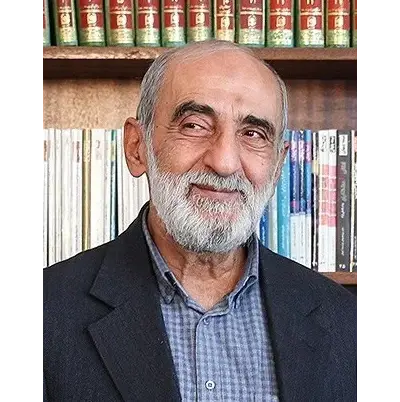
Hossein Shariatmadari (Persian: حسین شريعتمداری) is the managing editor of Kayhan, a conservative Iranian newspaper.
