Frantz Fanon Quotes
National liberation, national renaissance, the restoration of nationhood to the people, commonwealth: whatever may be the headings used or the new formulas introduced, decolonization is always a violent phenomenon.
Fanon, Frantz. The Wretched of the Earth. Translated by Constance Farrington, Grove Press, 1963, p. 35.


Chile with help from San Martin had ejected the Spanish. O’Higgins, the Chilean leader had joined up with San Martin and served under his command. The sectional rivalry bothered men like Carrera. Instead of seeing all the South Americans fighting the Spanish as allies as O’Higgins did, Carrera and his brothers refused to join a government of unity and they and their troops were just as dictatorial and cruel as the Spanish had been. O’Higgins gave Indians and Blacks equal rights with whites which distressed the aristocratic Carrera’s. Finally the Carrera’s tried to set up their own government, and the new Chilean government disarmed their militia and executed two of the three Carrera brothers who were leading the militia troops who were little more than thieves and brigands.


See Thomas Jefferson: {605051} for a somewhat similar notion.


British colonial economics imported raw materials to England which then exported them back to the colonies as manufactured goods. Gandhi correctly calculated that by minimizing purchase of English cloth, colonial control of India would not be as profitable. Gandhi not only called for the boycott, but called on Indians to spin their own cloth, set an example be spinning himself, and his Congress party adopted the spinning wheel as its logo and symbol which continues today. Narcotics, was at the time not only legal, but British economic interests controlled much of the world narcotics trade. Gandhi’s call for a boycott of narcotics was as much an economic tactic as it was a health measure.


Shortly after the failed uprising the Mufti went to Berlin where he was made a Nazi SS Major General and set up Arab SS Units to exterminate the Jews in the Middle East. See {586894}.


The Chief Secretary, Lord Castleregh, had put forward a resolution to bring about the unification of Great Britain and Ireland under the single British Parliament at Westminster. He and his allies had bribed a number of the Irish MPs to support the union. With Union some Irish MPs would then be able to win seats representing Ireland in the British Parliament. Although Grattan and most of the Orangemen opposed the Union, 4 months later, the bill passed comfortably. Ironically, Grattan was one of the Irish MPs whose popularity won a seat in the unified British Parliament.


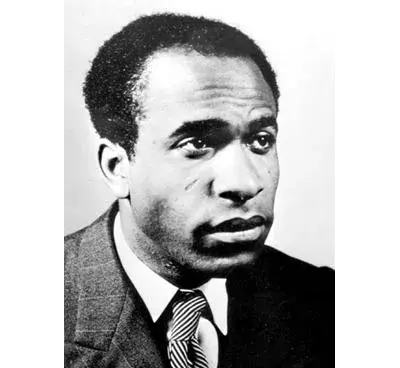
Frantz Omar Fanon, also known as Ibrahim Frantz Fanon, was a French West Indian psychiatrist and political philosopher from the French colony of Martinique (today a French department). His works have become influential in the fields of post-colonial studies, critical theory and Marxism. As well as being an intellectual, Fanon was a political radical, Pan-Africanist, and Marxist humanist concerned with the psychopathology of colonization and the human, social, and cultural consequences of decolonization.
