Joseph Stiglitz Quotes
My research in this period centered around growth, technical change, and income distribution, both how growth affected the distribution of income and how the distribution of income affected growth.
Stiglitz, Joseph E. "Joseph E. Stiglitz - Biographical." NobelPrize.org, Nobel Prize Outreach AB, 2001.


This is a classic illustration of a quotation illustrating the problem that political discussions have with the issue of causality. Conrad is absolutely correct in stating that investment and innovation as the direct cause for most productivity. However, without the demand created by consumption (or the prospect of it) there will be little capital and effort at innovation. There is a causal chain and different ideological proponents argue for their preferred link in the chain tending to ignore the other links. Many liberals tout increasing consumption and pay little attention to the investment and innovation—an error of the opposite of Conrad’s.


What is interesting about this quotation, is the author. This is a typical observation of a conservative politician, but here we have the head of the Communist Party of France extolling the importance of economic capitalistic growth. Intellectually, classic Marxist economic theory had become debunked even among many of the Communist leaders.


Europe was still suffering from the economic effects of the Great Recession.


Hubbard is one of the few 21st century Republican economists who was concerned about lower- and middle-class earnings, and one of the very few who ever advocated increasing government spending at all, much less for this purpose. In the 1950s to the 1970s, this was a common view of many Republican economists and politicians, but in the next 40 years, the Republican party moved away from its Lincoln and liberal traditions, and even became the party of choice for racists.

The most successful way of poor nations developing rapidly is to trade with rich nations.


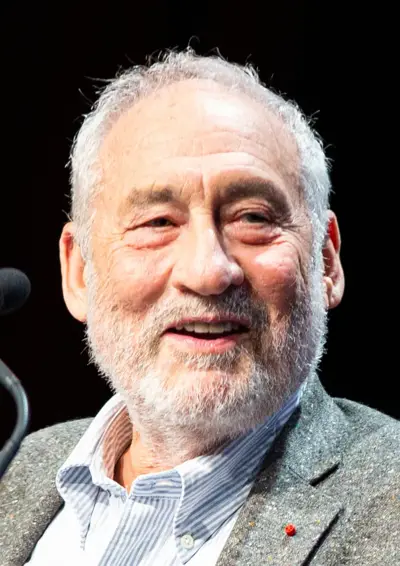
Joseph Eugene Stiglitz is an American economist, public policy analyst, and a professor at Columbia University. He is a recipient of the Nobel Memorial Prize in Economic Sciences (2001) and the John Bates Clark Medal (1979). He is a former senior vice president and chief economist of the World Bank and is a former member and chairman of the (US president's) Council of Economic Advisers. He is known for his support of Georgist public finance theory and for his critical view of the management of globalization, of laissez-faire economists (whom he calls "free-market fundamentalists"), and of international institutions such as the International Monetary Fund and the World Bank.
