Mark Twain Quotes
… my kind of loyalty was loyalty to one's country, not to its institutions or its office-holders. The country is the real thing, the substantial thing, the eternal thing; it is the thing to watch over, and care for, and be loyal to; institutions are extraneous.
Samuel Langhorne Clemens, 1835-1910
Mark Twain, Writer, Founder, Anti-Imperialist League, A Connecticut Yankee in King Arthur's Court
Sourced by: Eigen's Political and Historical Quotations

Samuel Langhorne Clemens, 1835-1910
Samuel Langhorne Clemens, 1835-1910


Russell despised the Commission Chairman, Chief Justice Earl Warren and had refused to serve. Johnson changed Russell's mind. See Richard B. Russell.

In 1999 4 pro-reform newspapers were ordered closed by the Iranian government. Neshat, had been shut down for, among other things, “insulting Islam.” The publishers reopened the newspaper under a different name but felt constrained to make a statement of purpose and loyalty.

Defending his opposition to a League of Nations. He was instrumental in preventing the United States from joining the League of Nations which President Wilson had worked so hard to create. The Senate never ratified the treaty which Wilson had signed.


Saloth Sar Pol Pot. He was responsible for the brutal killing of over 1 million of his own people.


He had been attacked by the extremists in his own party for serving as the Ambassador to China during a Democratic administration. Huntsman, fluent in Chinese and very familiar with Chinese culture, was a very successful Governor and was recognized by President Obama as being uniquely qualified and as a Patriot he made this great statement about service to country


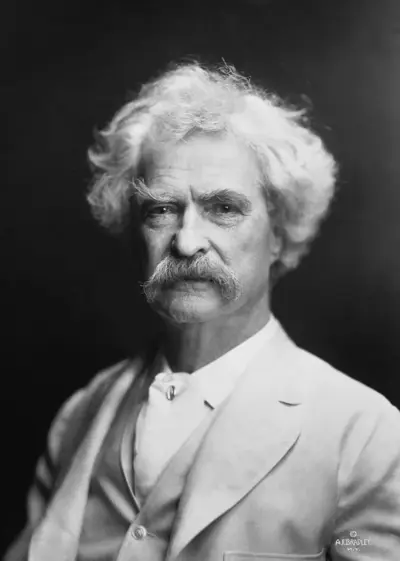
Samuel Langhorne Clemens, known by his pen name Mark Twain, was an American writer, humorist, entrepreneur, publisher, and lecturer. He was lauded as the "greatest humorist the United States has produced," and William Faulkner called him "the father of American literature". His novels include The Adventures of Tom Sawyer (1876) and its sequel, the Adventures of Huckleberry Finn (1884), the latter often called "The Great American Novel".
