Krzysztof Penderecki Quotes
My family was very open. My grandfather was German and a Protestant. My father, a lawyer, was Greek-Catholic and played the violin. My mother was very religious and went to church twice a day. My grandmother was Armenian. So I was raised with three different faiths - that's why I am so open.
Schwinger, Wolfram. Krzysztof Penderecki: His Life and Work. Translated by William Mann, Schott, 1989.


The Ottoman Empire was a word Superpower for over 1,000 years, longer than any other in history, One of its great strengths was its pluralism and ability to not only absorb and assimilate people from other nations, cultures and religions, but also to utilize those people in key positions and contributions to their society. Christians and Jews rose to the highest positions under the Sultans. They became Governor’s of Provinces, manages of departments and even Grand Vizier to the Sultan himself. Jewish and Christian physicians, attorneys, traders were all valued in the Empire even though the had a second class status relative to Muslims. The opportunity was always there to convert to Islam and many did, but many did not and thrived, The Ottomans saw Christian Europe, not only in continuous religious conflict, but individual nations were never able to use the talents of the religious minority, the way that the Ottomans did, and later the United States did. Not only did the Ottomans allow immigrants from all over the world to become part of the Empire Government or Economy, but they actually send agents throughout the empire to find the best and the brightest of young men—regardless of religion or nationality—and bring them to the Sultan’s court for education, training and service. IT should be noted however, that the motivation was in no way moral or a desire for fairness. It was totally pragmatic. Exceptional manpower was not to be wasted.


Fiji is a nation which at the time was beset with ethnic strife and tension. In addition to the religious tension there were Indian immigrants who tended to be economically more successful than the indigenous Fijians. There was an English tradition from the days of being a British Colony and the traditional tribal leaders and chiefs were being disenfranchised by modern democratic structures. The military was not under the control of the civilian government and coups pitted some ethnic groups against others.


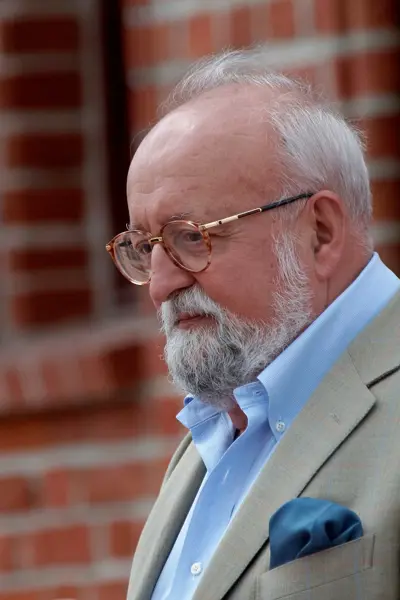
Krzysztof Eugeniusz Penderecki was a Polish composer and conductor. Among his best known works are Threnody to the Victims of Hiroshima, Symphony No. 3, his St. Luke Passion, Polish Requiem, Anaklasis and Utrenja. Penderecki composed four operas, eight symphonies and other orchestral pieces, a variety of instrumental concertos, choral settings of mainly religious texts, as well as chamber and instrumental works.
