W. E. B. Du Bois Quotes
Most negroes are still serfs bound to the soil or house servants.
W. E. B. Du Bois, 1868-1963, Educator and author, Co-Founder of the NAACP, Description of the status of Blacks, 1900
Sourced by: Eigen's Political and Historical Quotations

His solution was not to change the prejudice or improve the opportunity for Blacks but to have complete separation of the races. See {625687}.

Johnson was then Vice President.


The letter was written in the supposed style of a Black after Emancipation and includes most of the ugly false stereotypes of the worst of the racists of the present and the slaveowners of past times. Williams stated that he was not a racist and was trying to make a point about freedom required risk and responsibility. However, the effort was interpreted by many people, Black and white, to be insulting and a put down of African Americans. At the same time, although most of the Tea Party members were not racists, most of the racists in America were supporters of the Tea Party. Those people interpreted the quotation as "telling it like it is" about Blacks who do not want the responsiblities and risks of freedom and are not yet developed sufficiently to be equal citizens in a democracy.

[This was the first Abolition appeal written by a Black Man. It was published in Boston and was very popular going through two more printings within the next two years.]


This law required the treatment of Blacks as whites were then treated with respect to indentured servitude—a limit of 10 years after which the person would be free. However, this law was poorly enforced. The “General Court” was the name for the legislature of the Rhode Island colony.

This quotation illustrates how the racist South defeated the objectives of the Civil War and Reconstruction by the institution of Jim Crowe laws and so called “states’ rights”. It would take more than another half century for the Yankees and the vast majority of the non-Southern Americans decided that the Southerners could no longer “do as they pleased” with fellow human beings. It is hard to believe for us today that an entire section of our country could actually believe in the morality of the South but that is the tragic history of race relations in America.

Nott, a Southerner who owned slaves, was not only an apologist for slavery as this quotation illustrates, but also wrote on his theories of race. Nott was one of the writers about race that Darwin singled out as being completely wrong in 1871: The Descent of Man.

Under the previous Republican administrations, virulent and overt racists were not generally appointed especially as they were generally then Democrats. However, when Woodrow Wilson was elected president, he not only appointed many overt racists but he himself may have been one of the most racist Presidents every to inhabit the white House. He fired almost all the Blacks who held positions in the Federal government.


As a British Loyalist officer, he and his men were dispatched to Savannah, Georgia. There he saw the Southern version of slavery for the first time and was shocked at the cruelty. At the end of the Revolutionary war, he and many other loyalists fled to Canada and began his political career, then representing Britain in the Caribbean. See also {591379}.

The President often referred to this statement as an example of his wife’s acumen. She had been born to a Southern plantation and inherited the land and the slaves. Her view, and his, were typical of the Southern point of view in early America.
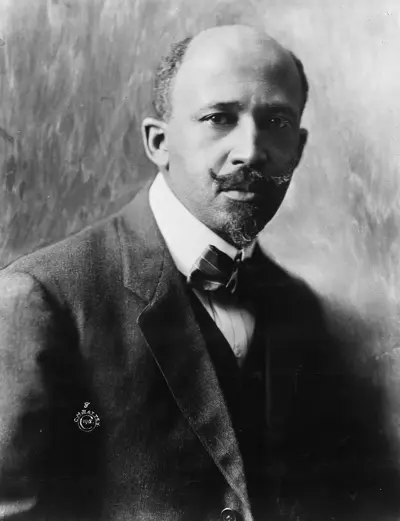
William Edward Burghardt Du Bois was an American sociologist, socialist, historian, and Pan-Africanist civil rights activist. Born in Great Barrington, Massachusetts, Du Bois grew up in a relatively tolerant and integrated community. After completing graduate work at the Friedrich Wilhelm University (in Berlin, Germany) and Harvard University, where he was the first African American to earn a doctorate, he became a professor of history, sociology, and economics at Atlanta University. Du Bois was one of the founders of the National Association for the Advancement of Colored People (NAACP) in 1909.
