Edward Forbes Quotes
Moreover it is becoming the Britons, whether scientific or unscientific, who boast at all fitting occasions of their aptitude to rule the waves, should know something of the population of their saline empire, especially of those parts of it immediately in contact with their terrestrial domain, and the coasts of the Continent to which our United Kingdom appertains.
Forbes, Edward, and Sylvanus Hanley. A History of British Mollusca, and Their Shells. Vol. 1, John Van Voorst, 1853.

This quotation illustrates several historical differences of the past with today. To be a world superpower, one had to have a dominant navy. Yet that navy was, in Churchill’s concept, a defensive system. It could protect the nation from invasion, and its merchant ships on the seas, but a navy provided no threat to invade towns and villages in Europe or elsewhere. Germany and France in contrast, with their large armies could invade other nations and menace Europe and Asia. It also illustrates why the navy and the army were considered completely separate departments of government in that they had different functions. The early American government had a Navy Department and Secretary but no Secretary of the Army or standing army.

Germany had a very small and insignificant navy. It was Tirpitz who persuaded the nation to develop sea power.

Frederick the Great. He and many other Europeans thought that England had been so preoccupied with the American rebellion that she was ignoring Europe and other traditional foreign policy interests of theirs.


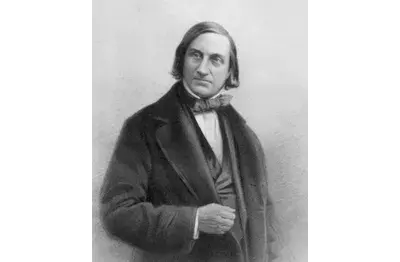
Professor Edward Forbes FRS, FGS was a Manx naturalist. In 1846, he proposed that the distributions of montane plants and animals had been compressed downslope, and some oceanic islands connected to the mainland, during the recent ice age. This mechanism, which was the first natural explanation to explain the distributions of the same species on now-isolated islands and mountain tops, was discovered independently by Charles Darwin, who credited Forbes with the idea. He also incorrectly deduced, the so-called azoic hypothesis, that life under the sea would decline to the point that no life forms could exist below a certain depth.
