Grant Heslov Quotes
'Monuments Men' is a movie... I don't want to say for grown-ups, because some young folks could appreciate it, too. But if you're expecting 'Transformers,' you're going to be disappointed.
Heslov, Grant. Interview by Christina Radish. Collider, Complex Networks, 4 Feb. 2014.


De Gaulle was a very difficult ally. He was ashamed that so many of his countrymen collaborated with the German invaders including fighting against the allies and the collapse of the French Army which, although it was larger than the German invader, had exhibited much cowardice. His way of dealing with this shame was to exaggerate the positive role that the loyal French and the serious Free French Fighters and to deny the extent of the negative behavior. He was always demanding that the small Free French Army be included in all military operations, and when successful, they be given equal credit along with the British, Americans, and Russians even though the French only contributed a tiny proportion of the effort. De Gaull’s ego, personal and national was enormous and Churchill had just as great a national ego. Hence for De Gaulle, Churchill was a kind of enemy. The “Channel” referred to the English Channel.

The military security people were so used to ferreting out communists in the 1930s that they had a hard time adjusting to the fact that the security risks or people who might have German connections or backgrounds. Many immigrant scientists were recruited for work on the Manhattan project to build the atomic bomb and they only did security clearances. The military security people kept checking on any communist background they might have had as opposed to possible connections with fascist organizations. By the end of the war they had adjusted but then had to go back to looking for communists as the Cold War evolved.

Many scientists were reluctant to work on instruments of death and destruction. Roosevelt and others were so successful that virtually every major scientist in America worked on the war effort including the development of the atomic bomb.

The British and American bombing of Germany had become so effective that most of the German industrial system was destroyed. However, early in the War, Germany had violated the Geneva Convention and was indiscriminately bombing London and other part of England. In addition the German Air Force had bombed Warsaw, and many other cities throughout Europe. The German’s had killed over 20 million Europeans. When the Allied bombing produced high collateral damage against civilians, some argued that even though German had deliberately used this tactic, the allies should stop the saturated bombing if there were to be high civilian collateral damage. Others argued that it was unfortunate but a military necessity. There were others like Brenen, who argued that killing German women and children was desirable and just.

The allies had differences in desirable strategy alternatives. Russia was facing the German Army on its Eastern front and causing huge German casualties but were paying for them in large loss of Russian life—civilian and military (The Russians suffered 22 million deaths as a result of WWII.) Stalin wanted to open a second front in France which would force the Germans to move some divisions from the Russian front, thereby relieving some of the pressure.


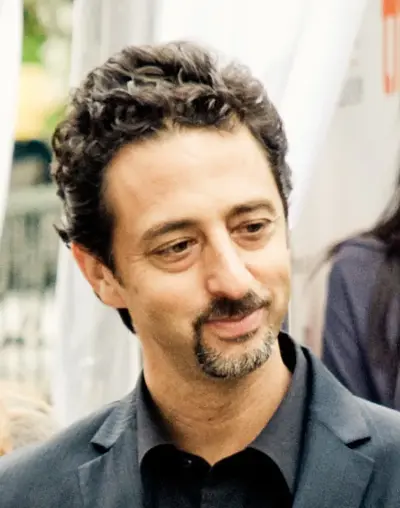
Grant Heslov is an American actor, film producer, screenwriter and director, known for his producing and writing collaborations with George Clooney, which have earned him four Oscar nominations. As a co-producer of Argo (2012), he received the Academy Award for Best Picture in 2013. As an actor, he has appeared in films including True Lies (1994), Black Sheep (1996), Enemy of the State (1998) and The Scorpion King (2002), as well as performing supporting roles in several films made with Clooney.
