John Ruskin Quotes
Modern education has devoted itself to the teaching of impudence, and then we complain that we can no longer control our mobs.
Ruskin, John. Fors Clavigera: Letters to the Workmen and Labourers of Great Britain, Volume I. George Allen, 1871.


See Diogenes for a similar sentiment


When the British first colonized South Africa, the area they used was akmost uninhabited or very sparcely so. However, some Black tribes (including the Zulus) were moving from the north and themselves were colonizing or annexing the areas to their kingdom. The British were most interested in Trading so did not have large land asperations. The Dutch white Boer Africanners, in contrast, wanted to farm the lands and use the range for their cattle. They wanted the land. The English policy was that there would be friendly relations with the Black tribes surrounding their Cape Colony and no one should take their land. However the Boers started attacking the Black areas and seizing their farms and villages. At first, the English assumed that the Blacks would easily be able to ward off the invasion as the Afrikanners had no professional troops like the British. However, the neighboring tribes were not very warlike or good fighters. They were being overrun by the Zulus coming from the North and the Boers from the South. The British Government had a real problem in that they would have to have British soldiers fight the white Afrikanners if they wanted to stop the illegal white invasions. This was the root of the Boer War where the British would be fully at war with the Africanners.


Snow was one of the first people to call attention to problem of the intellectual gulf between most educated people and scientists. See {635971}. As politicians generally fall into the former group, they have had a particularly difficult dealing with scientific issues since the scientific revolution of the 20th century produced this cultural chasm.
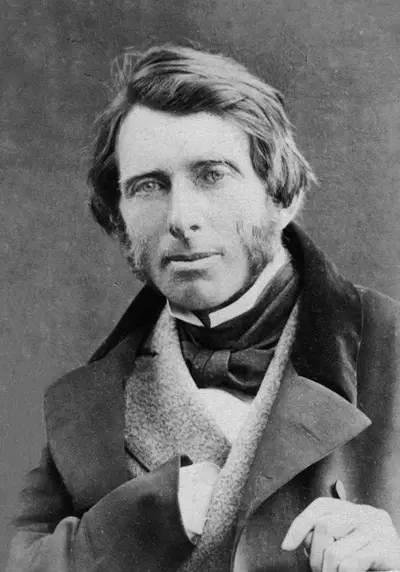
John Ruskin was the leading English art critic of the Victorian era, as well as an art patron, draughtsman, watercolourist, philosopher, prominent social thinker and philanthropist. He wrote on subjects as varied as geology, architecture, myth, ornithology, literature, education, botany and political economy.
