Baron d'Holbach Quotes
Many men without morals have attacked religion because it was contrary to their inclinations. Many wise men have despised it because it seemed to them ridiculous. Many persons have regarded it with indifference, because they have never felt its true disadvantages. But it is as a citizen that I attack it, because it seems to me harmful to the happiness of the state, hostile to the march of the mind of man, and contrary to sound morality, from which the interests of state policy can never be separated.
Holbach, Paul Henri Thiry. Christianity Unveiled. W. Carver, 1831, p. 5.


Bush was trying to obtain the Republican Presidential Nomination and that party had come under the influence of Protestant Evangelicals who could in effect veto any candidate in the Primary election. Bush, who was already suspect with the Evangelicals, chose to make this statement with the full knowledge that there is no Constitutional citizenship requirement to believe in a god and that a number of the leading founding patriots and founders had been atheists. However his tactics were successful and the following year he was the Republican nominee. Despite this statement, he never acted on it or made it a part of his administration’s principles. Politicians are often placed in these difficult positions where they are pressured into positions not to their liking in order to politically succeed. In this case, he never did more than make the disgraceful statement. He did not adopt any policy of take any action. However, this quotation is unique in American history as the only time an American president ever stated that American citizenship should not be recognized for religious reasons only.

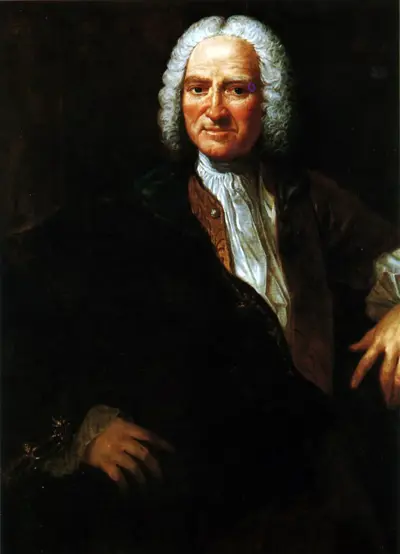
Paul-Henri Thiry, Baron d'Holbach, was a French-German philosopher, encyclopedist, writer, and prominent figure in the French Enlightenment. He was born Paul Heinrich Dietrich in Edesheim, near Landau in the Rhenish Palatinate, but lived and worked mainly in Paris, where he kept a salon. He was well known for his atheism and for his voluminous writings against religion, the most famous of them being The System of Nature (1770).
