Karel Capek Quotes
Man will never be enslaved by machinery if the man tending the machine be paid enough.

Sinclair had written an expose of the meat packing industry – the Jungle – which used as its setting the Armour meat packing factory. It changed the way the public thought about the industry, the role of government and regulation. President Roosevelt took up the reform role, and got Congress to Regulate the quality and cleanliness of the meat packing industry. Sinclair, however not only wanted that reform, but also wanted the labor wages and conditions reformed. He referred to the Armour plant as the fortress.


Labor leader Samuel Gompers used this statement to publically praise the passage of the Clayton Anti-Trust Act.


This is not a common quotation from Thoreau. The great man for whom the establishment had so much respect had a very anti-capitalist streak. His view is that the employer will generally never pay his laborers a fair wage. Instead he will pay the laborer the lowest rate for which he can obtain the laborers services. If the laborer generates added value for his wage, the employer is in a zero sum game with the laborer. If part of the added value—the profit is paid to the laborer, the employer does not have it for himself (or his stockholders). In most cases, the laborer is forced to work for his and his family’s subsistence. This theory argues that they only way the laborer will get a fair wage is if there is a labor shortage (assuming no government laws or union pressure is in the picture. Many capitalists argue that a “fair” wage is what a free man is willing to work for and a free employer is willing to pay. So economics is like politics in general with respect to fairness—there is no universally accepted definition of what is fair.

This was written in the early years of the Great Depression. Over 25 percent of Americans were out of world. The stock market had crashed and many banks failed wiping out family savings where there was any. Social Security, Bank and Stock Market Regulations were not yet passed. The New Deal government was just starting creating jobs, but there was great concern that the capitalistic system had failed. Thomas and other critics were right that the U. S. Government had not before used its machinery for “ease and security of living”; they called for the adoption of state socialism. President Roosevelt however instead reformed American capitalism by adding substantial regulation, provided direct relief to the unemployed poor, stimulated the economy, created Social Security, Federal Deposit Bank Insurance, unemployment insurance and initiated massive public works programs. It took almost a decade but American Capitalism was saved and transformed to the greatest industrial output and standard of living increase the world had known. It was not until 2008 that the capitalistic American economy melted down again. Regulation of corporations had diminished. The banks failed and had to be bailed out again but as the result of Social Security, Unemployment Insurance and other programs there was some cushioning of the effect of the Great Recession. The middle and lower class insecurity was back along with the wealthy taking a much larger proportion of the national wealth. The big difference was that few called for an end to capitalism and the political debate was on how best to fix the weaknesses of capitalism. Even most socialists around the world had built their Social Democracies around a capitalistic economic structure.

We think of jobs being eliminated when technology is employed as a modern problem. But here, in 1936, automation was eliminating jobs rapidly. One fascinating difference is that Mrs. Roosevelt observes that the laborers jobs are eliminated and the high school and college graduates can run the enterprise. 75 years after this quotation, the jobs of the high school graduates were being eliminated and some higher education was necessary for most jobs. As technology improves, the workers who are necessary require more and more education.

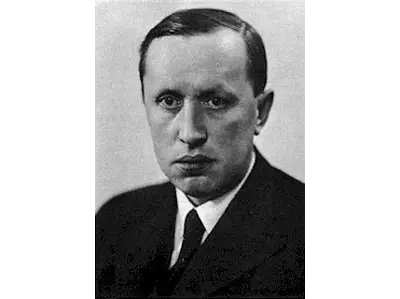
Karel Čapek was a Czech writer, playwright and critic. He has become best known for his science fiction, including his novel War with the Newts (1936) and play R.U.R. (Rossum's Universal Robots, 1920), which introduced the word robot. He also wrote many politically charged works dealing with the social turmoil of his time. Influenced by American pragmatic liberalism, he campaigned in favour of free expression and strongly opposed the rise of both fascism and communism in Europe.
