William Lamb, 2nd Viscount Melbourne Quotes
Lord Melbourne is very glad to hear that your Majesty is reading with the Prince. Hallam's work certainly requires much consideration and much explanation, but it is a fair, solid, impartial work, formed upon much thought and much reading. St Simon's is an excellent work; he has some prejudices, but was a good honest man, and his book is full of useful information. If your Majesty wishes for a book relating to what passed from one hundred to two hundred years ago, Lord Melbourne would strongly recommend the Private Memoirs of the Lord Chancellor Clarendon (Edward Hyde), not the great work, The History of the Rebellion_, though that is well worth reading, but the Memoirs and Bishop Burnet's History of his own time. The reigns of Charles II., James II., and the Revolution are very curious in the latter. During Queen Anne's reign the Bishop was not so much consulted, and his work is therefore not so interesting. If your Majesty wishes to turn your attention to more recent events, Professor Smyth's lectures upon Modern History, and particularly upon the French Revolution, seem to Lord Melbourne sound, fair, and comprehensive. Lord Mahon's is also a good work, and gives a good account of the reigns of George I. and George II. He has been thought by some in his last volume to have given too favourable a character of the Chevalier, Charles Edward Stuart.
2nd Viscount Melbourne. This is a fascinating historical quotation for two reasons. First it shows the formality of address that is still used in England when communicating with the monarch. The queen would never be addressed by her name but by her title—“Your Majesty”. Rarely would the second person by used such s “you.” The Queen or King would also use the third person when referring t herself—“Her Majesty” Most fascinating is that the person writing to the monarch would also never use the first person—I. Nor would they use their family name like “William Lamb.” The correct form of address was to use their aristocratic title—“Lord Melbourne” or their Government title—“The Prime Minister. This quotation also reflects a very interesting thing about the Queen and her husband Prince Albert. They were both very young. At this time she was only 23. She was responsible for the largest empire in the world, yet had almost no experience and relatively little education in political and history. The Prince was better educated but came from Germany and did not know much of English history and politics. So they both devoted a part of each day to red together and learn. Victoria had asked Melbourne to recommend the books that he and the Prince would read. They took their responsibilities very seriously and unlike many rulers of heads f state, had no difficulty admitting their ignorance and worked hard to overcome them.
William Lamb, 1779-1848], British Prime Minister (Whig), Letter to Queen Victoria, October 20, 1842
Sourced by: Eigen's Political and Historical Quotations


Actually, in the modern English tradition there is no censorship of library materials, but for many countries including some democracies, there is library censorship including some in the United States. However, the Internet has become the most democratic as government censorship is even harder, but still China, Saudi Arabia, and some other countries even censor the Internet.


Napoleon’s defeat and abdication took place at the same time and that was the major foreign policy news that effected Englishmen at the time. The War with America was strategically a side show. At the same time, the Americans ships had bested the English almost every time they fought (the biggest and best armed ships were needed for the European War with Napoleon so the English fought with second rate ships in the Atlantic). And although the English had the better of most of the land conflicts, the final Battle of New Orleans was such a humiliating, and one sided, rout of His Majesty’s army, that there was nothing politically to be gained by publicizing the facts of the war. The British government just wanted to negotiate a treaty ending the conflict with America and get on with the activity in Europe. The result is that the English people have never known very much about the War of 1812.


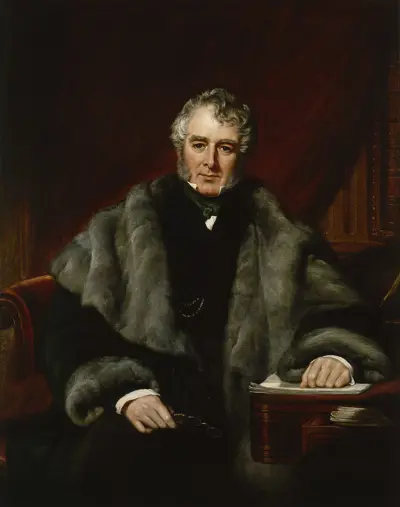
William Lamb, 2nd Viscount Melbourne, PC, PC (Ire), FRS, in some sources called Henry William Lamb, was a British Whig Home Secretary (1830–1834) and Prime Minister (1834 and 1835–1841). He is best known for being prime minister in Queen Victoria's early years and coaching her in the ways of politics, acting almost as her private secretary. Historians have concluded that Melbourne does not rank highly as a Prime Minister, for there were no great foreign wars or domestic issues to handle, he lacked major achievements, he enunciated no grand principles, and he was involved in several political scandals in the early years of Victoria's reign.
