Anti-Saloon League Quotes
Liquor traffic is un-American, pro-German, crime-procuring, food-wasting, youth-corrupting, home-wrecking, [and] treasonable.
In the midst of World War I:
Anti-Saloon League, Statement, 1918
Sourced by: Eigen's Political and Historical Quotations


When Washington was younger and running for the colonial Virginia assembly, he bought beer and rum for all the voters in his precinct. He did not then realize the damage that alcohol can do. One of the commonalities between Lincoln and Washington were their experience in seeing alcohol cause the death and/or ruination of many. See {630832}.

In the midst of the First World War: 1st Earl Lloyd-George of Dwyfor


She was a baroness—a member of the aristocracy who was a social reformer


Douglass had written of how the slave owners used alcohol to maintain control over the slaves: {611086}.


Despite the known link to crime, and the fact that alcohol kills many times more Americans that do illicit drugs, Mr. Bennett and most of his successors did not target drinking in their various war on drug efforts despite the fact that alcohol is a much more dangerous and addicting drug than any of the illicit drugs. In the George W, Bush administration, health authorities in the government were ordered not to tell the public that alcohol was a drug despite the fact that all the Surgeon Generals and medical science has explained that it is not only a dangerous drug, but is a drug that induces violence more so than any other drug. The alcohol lobby did not want the public to associate the alcohol industry with the evils that drug dealers produce, so they used their political clout with the Bush administration for whom the industry provided large political contributions as well as conservative political consultants.


An Aborigine herself, she had co-authored a major study of 45 aboriginal communities of Australia’s vast Northern Territory—the alcohol abuse was so great that young pre teen girls were trading sex for alcohol, parents in large numbers were too drunk to care for children. Few children attended school. Many were physically abused. The Government responded by attempting to ban alcohol in the aboriginal communities and withholding government welfare payments from parents who would not send their children to school. At the time there were 470,000 aborigines in Australia’s 20 million population.

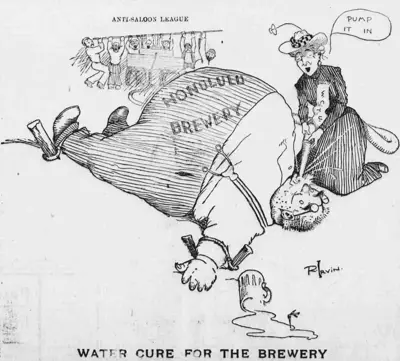
The Anti-Saloon League, now known as the American Council on Addiction and Alcohol Problems, is an organization of temperance movement that lobbied for prohibition in the United States in the early 20th century.
