A. B. Yehoshua Quotes
Let us not forget: The Palestinians in Gaza are our permanent neighbors, and we are theirs.
Yehoshua, A. B. "The Palestinians in Gaza Are Our Permanent Neighbors." Haaretz, Haaretz Daily Newspaper Ltd., 2014.


A major issue amongst Israeli’s is to how they should relate to those hostile Islamic nations in their area who claim they are at war with Israel or the Jewish People. This position in effect says that the oratory of those Islamic groups that claim that they are in a war—a holy war even—should be taken at their word and treated as a wartime enemy and Israel should actively attempt to kill and destroy them.


Jerusalem has been disputed by the Israelis and the Arab nations surrounding the city. Both want it as their capital, and both have historic and religious claims on it. When Jerusalem was under Arab control. However no Jew was allowed in the City, even to pray at the holiest of Jewish places, the Western Wall. When Israil gained control, there has been not only free access for Muslims, but they gave the Muslims control over the Temple Mount--holy to both religions. So for Rabin, if Israell does not control the city, Jews will not have access as has been shown by recent history, and the United Nations has deminstrated so often, they will not use force to maintain their committments to protect people or assure access to areas.


This was an interview with Reuters News Agency in English. Arab leaders often make English Statements to the Western Press which are completely contradictory to what they say to their Arab constituents and followers. In this case he seems to acknowledge that Hamas and he do not deny the right of Israel to exist and accepts that nation per se. Yet at the same time Meshaal has never made this statement in Arabic and has made no gesture to change the Hamas Charter which calls for the destruction and elimination of Israel or to criticize the Hamas other leaders and followers who constantly call for “Death to Israel” and the destruction of the Jewish state. See {585395} for an eloquent statement of the practice of Arab leaders and politicians.

At that time Jews in Palestine were in the minority. The issue of how to obtain the land was hotly debated amongst Jewish groups. Jabotinsky was at one extreme—colonize and take the land just as the Arabs had done to the Jews when there was a Jewish majority. His view did not however prevail. The policy was to buy the land from individual Arabs and Jewish land up to 1948 was obtained that way. In that year the UN partitioned Palestine and 11 Arab armies attacked the new state of Israel and asked the Arab civilians to leave the area so that the Army could cleanse it of Jews. Many did not, and they or their descendants are still on their land or have sold it. The Arabs who left, were suspected of being possible collaborators or terrorists, and they have never been paid for their land or allowed to return. Compensation is still in dispute. At the same time Jews driven out of Arab countries by law and the military have never been compensated or given any right of return either.

Lydda was a town in what is now Israel. In 1949 when the UN ordered the partition of the region into two states—one Jewish, the surrounding Arab nations all sent their armies to attack the nascent Israel and prevent it from ever forming a state. Incredibly, not only did the Jewish settlers beat back 14 attacking armies with civilians and volunteer militia, but organized their state very rapidly. The UN mandate gave citizenship in Israel to the people (including the Arabs) who lived in the partitioned territory of Israel. The invading armies broadcast messages through the airwaves and the imams asking the Arabs to leave the territory and go behind the Arab military lines so that they would not be injured when the Arabs used their artillery and tanks in their invasion. The Arab politicians also promised the Israeli Arabs that after the invasion, they could have the property of the Jews who would be pushed into the sea and banished. Many did; many did not preferring to stay in Israel for many reasons including the fact that the Jews promised a full citizenship in a democracy. The Israelis warned that if Arab natives left and joined the Arab invaders, they would not be allowed back as there would be no way to differentiate them from enemies. They and their progeny became the so called “refugees”. However in one Biblical town, Lydda (Lod) things were different. There were 17,000 Arabs and no Jews. There had been a small traditional population of Jews there but in 1921 there were anti-Jewish riots and Jews were either killed or forced out. Attempts of Jewish families to move back into their land over the years were met by Arab violence and ethnic cleansing. In 1949, Israeli militia and civilians took over Lydda, and despite the official Jewish policy against it, went on their own retaliatory version of ethnic cleansing and drove most of the Arabs out to the Arab lines outside of the partitioned areas. They were never allowed to return despite the fact that they had been forced out with several injured and killed. Israeli public opinion is divided as to the proper moral posture with respect to the families from Lydda. Shavitt and those with his view are in a large minority. Most Israelis feel that the 1921 expulsion of the Jews, and the more recent expulsion of all Jews from Egypt and other Arab countries, justifies the status quo. Some, have blotted out the Jewish immoral 1949 ethnic cleansing and some young Israelis believe the accusation of Jewish improper behavior in Lydda is just another of the many Arab lies about the Israelis. The issue is a moral dilemma for both peoples.


In the complicated and arcane Middle East, substantial majorities of Israelis and Palestinians both favored a two state solution, thus creating a Palestinian State out of the West Bank and Gaza. However, the Hamas terrorist organization won the majority of seats in the Parliament and formed the “government” of the Palestinian Authority. Hamas opposed Israel’s right to exist at all, as that position as well as virulent Anti-Semitic threats to all Jews in the world. Many called for Hamas to change their charter and crease their opposition to the right of Israel to exist. The President of the Palestinian authority called for new elections but Hamas refused. Thus Blair and other diplomats the world over were in a very difficult situation.


A minority of Jewish Israelis do not recognize the United Nations 1949 partition boundaries of the land creating modern Israel. They believe that God gave all the land to the Jewish people—as described in the Bible. Therefore, to them, the West Bank is a part of Israel. No Israeli government has ever maintained that position. However some governments which depend on settler and ultra-Orthodox support do not publicly disavow the position. Palestinians, look with alarm, on this view and the constant attempts at encroachment on West Bank land that the settlers attempt. Like the extremist Palestinians who want to sabotage any two-state solution, there is a minority of Israelis who do the same. These two groups made the peace process very difficult as their adherents are not only very passionate about their views, but have political influence out of proportion to their relatively small number of voters.
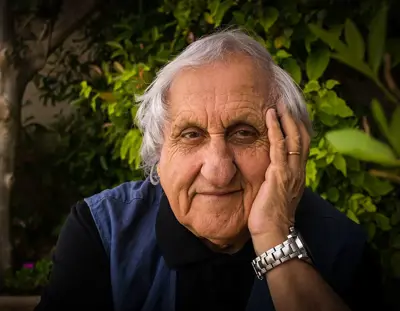
Abraham B. Yehoshua is an Israeli novelist, essayist, and playwright, published as A. B. Yehoshua. The New York Times called him the "Israeli Faulkner".
