Charles Henry Parkhurst Quotes
Labor is the handmaid of religion.
Parkhurst, Charles Henry. The Blind Man's Creed and Other Sermons. A. D. F. Randolph & Company, 1883.


Thomas of London. Tennyson’s quotations was not literal but the synthesis of the conflict. Beckett was the friend of King Henry and his Chancellor. Henry against Becket’s advice appointed him Archbishop of Canterbury, the head of the church in England. Soon Henry came into conflict with the Church and Thomas sided with the Church and against his old friend and king. The king had him assassinated despite their friendship.

Philip II, by this statement, and his subsequent behavior, made a major step forward in France for the separation of church and state. Previously, French kings played a major part in the selection of the bishops and other high clerics of the realm. Phillip ceased that type of interference. He did however, close down a religious commune for misbehavior, but that was at the request of both the church and civil authorities. See {617074} . The religious authorities at the time were delighted with this form of separation of church and state, but they were adamant that their church should be able to influence the monarchy and laws of the realm. In contrast today, the Chinese government does not allow any religion to interfere with the operation of the government, but insists that the Dali Lama and the Bishops of the Catholic church can only be appointed with their approval. Separation of church and state is a two way phenomenon.


Madison was a deist, but was firm that religion was to be an individual matter and not an area in which the state ought be involced.


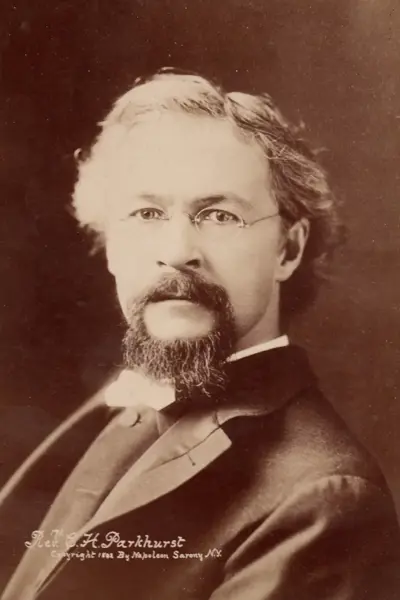
Charles Henry Parkhurst was an American clergyman and social reformer, born in Framingham, Massachusetts. Although scholarly and reserved, he preached two sermons in 1892 in which he attacked the political corruption of New York City government. Backed by the evidence he collected, his statements led to both the exposure of Tammany Hall and to subsequent social and political reforms.
