Teju Cole Quotes
Killing a bunch of people in Sudan and Yemen and Pakistan, it's like, "Who cares - we don't know them." But the current discussion is framed as "When can the President kill an American citizen?" Now in my mind, killing a non-American citizen without due process is just as criminal as killing an American citizen without due process - but whatever gets us to the table to discuss this thing, we're going to take it.
Cole, Teju. Interview. Mother Jones, 2013.


Executive Order 12333 prohibits political assassinations. The administration took the position that the prohibition did not apply to war where assassination (targeted killing) of enemy leaders is clearly permitted. The problem was that the George W. Bush Administration did not classify the “War on Terror” as a war. They didn’t want to treat captured jihadists as prisoners of war. The Obama administration also would not ask Congress for a Declaration of war, and this caused the moral, ethical, and legal ambiguity that has plagued targeted killings by drones or other means throughout the Afghan and Iraq Wars which were legally not wars.

Although the Amerian Drone program did inadvertently kill untargeted or mistakenly targeted civilians at that time, the collateral damage rate was smaller than any other weapons system available to the American forces. War has always produced unintended collateral damage. The only way to stop the killing of innocent civilians then and now is to stop the war.


The Congresswoman was referring to the fact that the U. S. Defense Department had trained Indonesian military officers who had leadership roles in the massacres and other human rights violations in East Timor in 1999.

[During the Guatemalan Civil War, the military had often tortured, murdered disappeared and sexually enslaved female relatives of men they suspected of being rebel. The object was to humiliate and emasculate the insurrectionists so that others will not join them and they will cease their revolutionary activities to protect their women. The civil war ended in 1996, and although military war criminals had been tried earlier but never for crimes – sexual crimes against women. 20 year had elapsed since the end of the war and this famous trial. The two war criminals were sentenced to 120 and 240 years in prison respectively, but they had escaped justice for more than two decades. The United States, in the middle of the Red Scare was supporting and financing the Guatemalan government and military. In addition America trained many of the military in counter-insurgency which taught some methods that were contrary to International Law and which were illegal for American soldiers to engage in. After official documents of the era were declassified, it became clear that U. S. officials—–especially the CIA--were aware of the excesses and war crimes of the Guatemalan military, but did little to stop it. See Quotes 583699, and 583697 for more on the American involvement.]


There was extensive hostility expressed by civilian populations in Pakistan and other countries where the United States made Drone strikes to take out terrorist leaders. However, there was much anti-American feeling in Pakistan before the Drone strikes.


Many Americans use this opinion to justify our Drone program. Others use it for other targeted killings or assassinations. However, Alston is opining about International Law. When a killing takes place in another country, the biggest problem is the laws of the country where the killing takes place. See {637113}. When a foreign diplomat is assassinated in America, we go after the killers because they have broken U. S. law even if the assassinating nation has convicted the target properly. Whenever we kill someone with a Drone Airstrike, we have the required conditions stated and have not violated International law. However, according to the Pakistani’s for example, we have broken their laws. However, in many occasions, there is little the country where the killing takes place can do anything other than making diplomatic protests unless they want to go to war and use force. Also, targeted killing is perfectly legal if the target is a combatant at war with the killing country, and this is the reason that most of the American Drone killings are legal from a U. S. point of view.

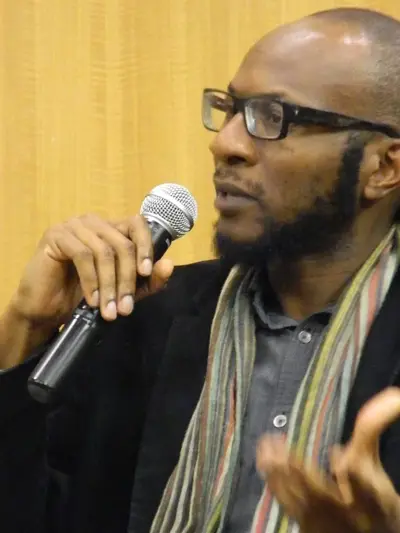
Teju Cole is a Nigerian-American writer, photographer, and art historian.
