Myron Scholes Quotes
Keynesian modelling relies on marginal propensity to consume and marginal propensity to invest. The idea that if we give more money to the poor, they have a propensity to consume that's much higher than the wealthy, though I wish they would talk to my wife about that; she seems to have a propensity to consume.
Scholes, Myron S. Panel Discussion. Lindau Nobel Laureate Meetings, Council for the Lindau Nobel Laureate Meetings, 25 Aug. 2011, Lindau, Germany.


Reference to the British Economist John Maynard Keynes who advocated government action to manage the economy.


All money has based on the Gold Standard then. But the economic output of the American colonies was increasing rapidly. If the money supply stays fixed, there is a shortage of money and this then inhibits further growth, Franklin realized this and called for an increase in the money supply. He was only 23 years old when he wrote this essay and had these insights.

Iceland's economy collapsed in the Meltdown of 2008. Their largest banks failed completely as they had engaged in the same kind of risky investments as the American banks had. Their government however did not have the assets to bail their banks out. So they let the banks fail and protected the small depositors with their limited assets. They then devalued their currency drastically, making their fishing and other products a great bargain for other nations of the world and though humiliated the Islanders started getting jobs as demand for Islandic exports grew. Some Icelanders who owned companies were making a great deal of money. Taxes were raised for high income citizens. To prevent the money being taken out of the country and invested so that the jobs would not benefit Icelanders or the earnings were not as taxable in Iceland, the nation imposed Capital Controls—no money was allowed to be taken out of the country except small amounts for business travel expenses. Iceland recovered rapidly and by 2015, at which point the Minister of Finance felt that the country was losing more than it was gaining, so it was time to end the Capital Controls.


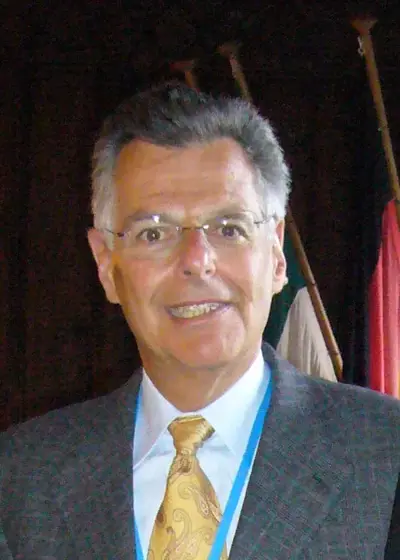
Myron Samuel Scholes is a Canadian-American financial economist. Scholes is the Frank E. Buck Professor of Finance, Emeritus, at the Stanford Graduate School of Business, Nobel Laureate in Economic Sciences, and co-originator of the Black–Scholes options pricing model. Scholes is currently the chairman of the Board of Economic Advisers of Stamos Capital Partners. Previously he served as the chairman of Platinum Grove Asset Management and on the Dimensional Fund Advisors board of directors, American Century Mutual Fund board of directors and the Cutwater Advisory Board. He was a principal and limited partner at Long-Term Capital Management and a managing director at Salomon Brothers. Other positions Scholes held include the Edward Eagle Brown Professor of Finance at the University of Chicago, senior research fellow at the Hoover Institution, director of the Center for Research in Security Prices, and professor of finance at MIT's Sloan School of Management. Scholes earned his PhD at the University of Chicago.
