L. Frank Baum Quotes
I've married a man who owns nine cows," said Jinjur to Ozma, "and now I am happy and contented and willing to lead a quiet life and mind my own business." "Where is your husband?" asked Ozma. "He is in the house, nursing a black eye," replied Jinjur, calmly. "The foolish man would insist upon milking the red cow when I wanted him to milk the white one; but he will know better next time, I am sure.
Baum, L. Frank. Ozma of Oz. Reilly & Britton, 1907, p. 259.


That is easy for the man to do. At the time, this Indian view was little different than that prevailing amongst religious Christian whites.


A highly respected intellectual, Schlesinger, had joined the John Kennedy Presidential Campaign. The announcement produced a slew of news stories. A Boston Globe reporter called Schlesinger’s wife, a respected intellectual figure in her own right, and asked if she was also supporting Kennedy in the Democratic Primary. She told him that she was supporting Stevenson, not Kennedy and a story with that information appeared the next day. This was embarrassing for the JFK campaign and particularly for Robert F. Kennedy, JFK’s younger brother who was the campaign director. He read the Boston Globe article, made a copy and wrote this famous quotation in the margin and sent it to Schlesinger. Historically it was unusual for the wives of public figures to hold public views different from their husbands. This was the main reason the story was news for the Boston Globe. But there were always women who maintained an independence of thought and political views, though in 1960, they were far fewer than today when this has almost become typical. However, Robert Kennedy, like Schlesinger and JFK himself had married very strong, accomplished women and they were not threatened by their wife’s independence. Hence the humorous questions Kennedy wrote.


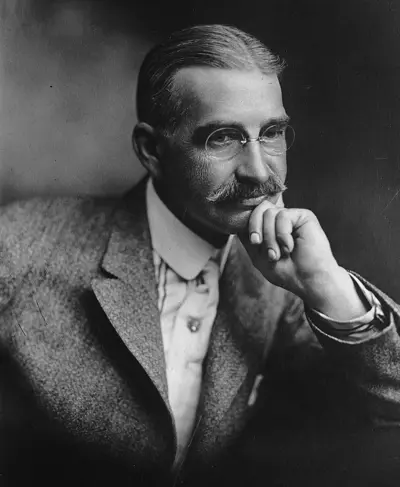
Lyman Frank Baum was an American author best known for his children's books, particularly The Wonderful Wizard of Oz and its sequels. He wrote 14 novels in the Oz series, plus 41 other novels (not including four lost, unpublished novels), 83 short stories, over 200 poems, and at least 42 scripts. He made numerous attempts to bring his works to the stage and screen; the 1939 adaptation of the first Oz book became a landmark of 20th-century cinema.
