Harold L. Ickes Quotes
It seems to me intolerable to allow private people to use public capital in order to make a guaranteed profit for themselves .... If private citizens won’t supply munitions of war at a reasonable profit and take pot luck with the rest of the citizens in the matter of taxation, then the government ought to build its own plants and conscript the necessary managers to run them.
Harold L. Ickes, 1874-1952, U.S. Secretary of the Interior (Republican), Secret Diaries, 1940
Sourced by: Eigen's Political and Historical Quotations


The founder was Charles E. Coughlin, 1891-1979, a demagogic Catholic Priest who drafted the principles and invited others to join him. Hundreds of thousands did in this organization which began in idealism, and ended in scandal and hate mongering, so much so that Father Coughlin was ordered off the radio and out of politics by the Catholic Church. The National Union in 1936 had morphed into the Union Party which ran Presidential candidates in the 1936 election. The Coughlin and the Union were a mixture of Fascist and Socialist principles. The prohibition of private ownership of banks and utilities was one of the radical socialist notions.

The first part of this quotation has defined the attitude of most Americans towards private enterprise and government since then. The second part of the quotation—the undesirability of public ownership of railroads has given way to the modern problem that no passenger railroad can be operated profitably by anyone—private or public. So Roosevelt’s “far-reaching disaster” was finally complete with the Federal Government taking over responsibility for Amtrack.

Ironically the far right wing Fascists and the far left wing Communists agreed on this point: nationalization.

Churchill and Labor Leader Clement Attlee found themselves at adjoining urinals during a break in a political event.

There has been no war in US history where we ever knew who was getting the contracts during the war.
This included even the contracts that had nothing to do with the war, like the contractor who provided transportation for returning veterans or services to soldiers families when they were overseas. Individual contracts come into the open but the government has never supplied a list of the contracts to the public could see who was making money from the war and determine if the administration in power was selected the best and least expensive contractors or just rewarding donors and cronies.


Churchill detested Attlee both personally and for his political philosophy which was left wing especially favoring government nationalization of all large industry and business. Churchill walked into the very large men’s room and saw Attlee at a urinal and one end. Churchill, setting Attlee up, walked all the way to the other end of the row of urinals and began to use one there. Attlee commented that Churchill was appearing very standoffish to be urinating so far away. Churchill, then let loose with this repartee. See {620650} for another put down of Attlee.


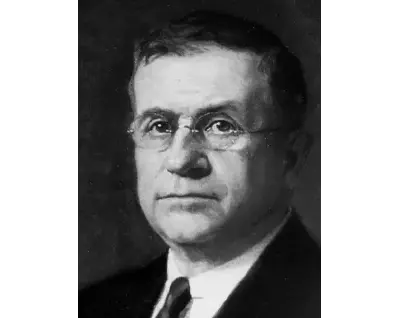
Harold LeClair Ickes was an American administrator and politician. He served as United States Secretary of the Interior for 13 years, from 1933 to 1946, the longest tenure of anyone to hold the office, and the second longest-serving Cabinet member in U.S. history after James Wilson. Ickes and Labor Secretary Frances Perkins were the only original members of the Roosevelt cabinet who remained in office for his entire presidency.
