Charles Sumner Quotes
It is with humiliation that I am forced to insist upon the same equality in other public institutions of learning and science, also in churches and in the last resting-places of the dead. So far as any of these are public in character and organized by law, they must follow the general requirement. How strange that any institution of learning or science, any church or any cemetery should set up a discrimination so utterly inconsistent with correct principle
This was one of the early attacks on discrimination in public accommodations.
Charles Sumner, 1811-1874, U. S. Senator (Democrat, Free Soiler and Republican, MA), Senate Speech Introducing Supplementary Civil Rights Bill, 1872
Sourced by: Eigen's Political and Historical Quotations


Many fighters for civil rights split from the majority of the Black leadership over racial preferences for affirmative action.


This was the first major civil rights speech. He had previously in his political career tread carefully in the civil rights arena. The Southerners had disproportionate control over the Congressional committee chairmanships and they could hold up his entire legislative agenda. JFK’s father was a right wing fascist who supported Hitler earlier and always advised against pushing civil rights.


Before the civil rights act was passed, most labor unions will racist and discriminated against black workers. The United Auto Workers union was an exception and Reuther was a strong advocate of desegregation and equal rights.


60 years later George Orwell would use the last line in his famous Animal Farm --- See {625338} .


Southerners and some others wanted to discriminate and fought civil rights legislation. The excuse they gave for opposition was that the Federal Government was usurping the power of the states to determine what civil rights people of the state would have. Shellabarger made it clear that the civil rights bill would not require ANY rights to be given. It just required that if the states granted rights, they could not discriminate by race as to those rights. But the states were free to decide which rights all citizens of the state would have. See {623473} .

Douglas was appealing to the racist crowd in Galesburg by showing that Lincoln actually believed in Racial Equality. This technique was used be racist politicians—since then and in a few places of the South even into the 21st century.


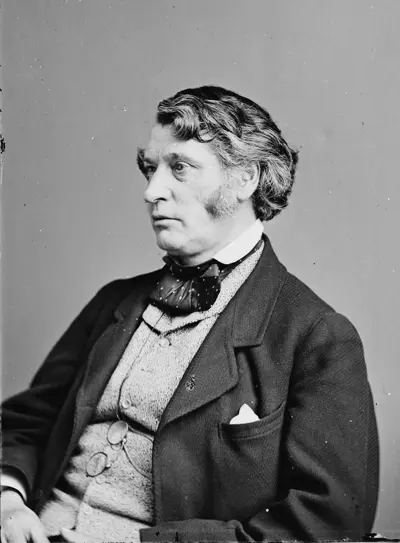
Charles Sumner was an American statesman and United States Senator from Massachusetts. As an academic lawyer and a powerful orator, Sumner was the leader of the anti-slavery forces in the state and a leader of the Radical Republicans in the U.S. Senate during the American Civil War. During Reconstruction, he fought to minimize the power of the ex-Confederates and guarantee equal rights to the freedmen. He fell into a dispute with President Ulysses Grant, a fellow Republican, over the control of Santo Domingo leading to the stripping of his power in the Senate and his subsequent effort to defeat Grant's re-election.
